

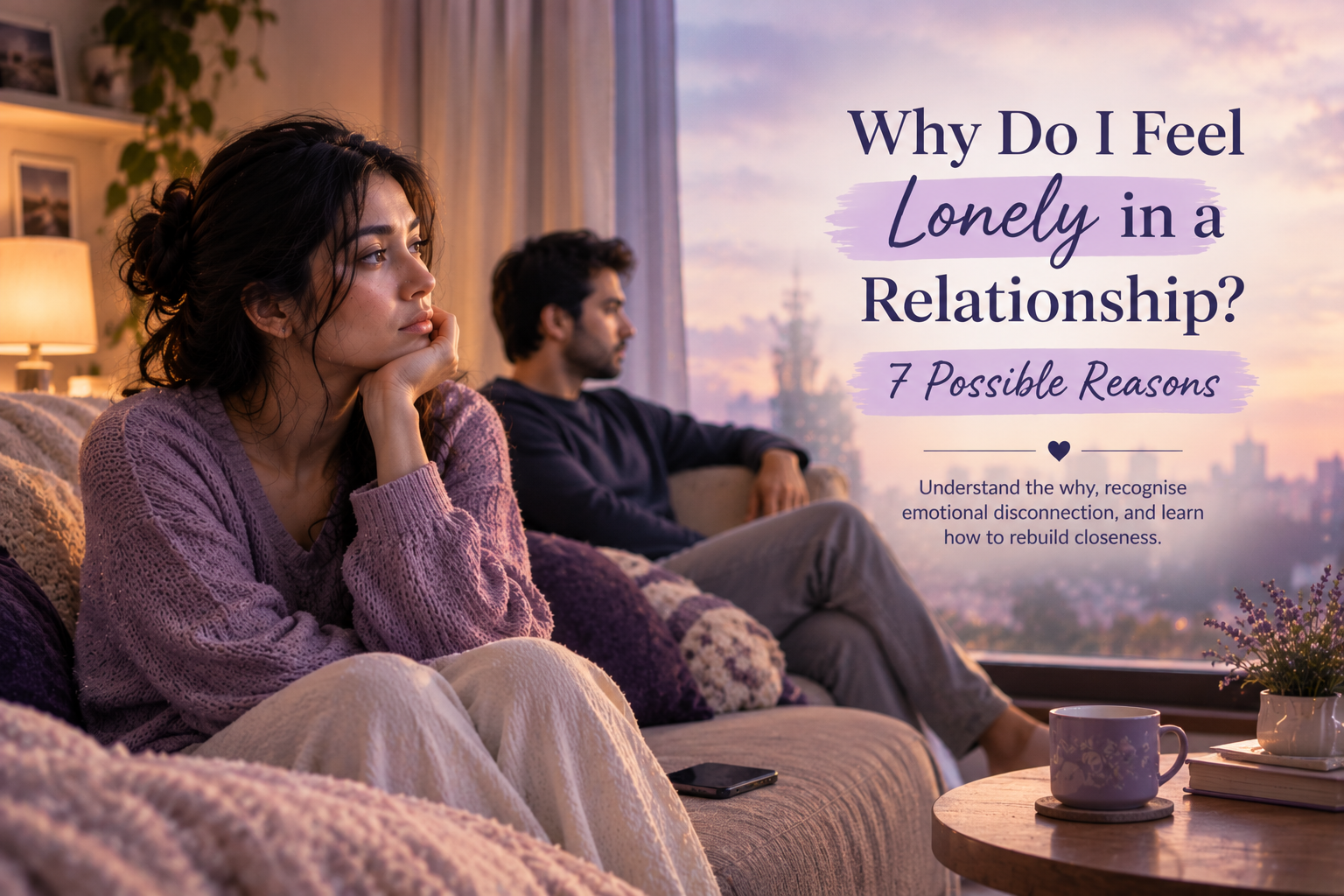
Being in a relationship is often associated with love, companionship, and emotional support. However, what happens when you have a partner but still feel alone?
Perhaps you spend time together, exchange messages every day, and talk about ordinary things. Yet, when something troubles you, you struggle to feel understood. You may even hesitate to share your feelings because you are unsure how your partner will respond.
Feeling lonely in a relationship does not necessarily mean that love has disappeared. Sometimes, emotional closeness fades because of stress, poor communication, unmet needs, or unresolved issues. In other cases, two people may care about each other but express affection in very different ways.
Understanding the reason behind your loneliness is the first step towards deciding what you need and whether your relationship can become more emotionally fulfilling.
1. You Feel Lonely in a Relationship Because You Lack Emotional Connection
Physical closeness and emotional intimacy are not the same thing. You can sit beside someone every evening and still feel disconnected if you cannot openly share your thoughts, fears, and feelings.
For example, your partner may ask about your day but quickly change the subject when you discuss something emotionally important. Over time, you might stop sharing because you expect your feelings to be overlooked.
As a result, the relationship can begin to feel more like a routine than a meaningful connection.
What you can do: Start with an honest conversation about what emotional closeness means to you. Explain what helps you feel understood, whether that is attentive listening, affection, or spending quality time together.
2. Your Conversations Have Become Superficial
Do your conversations mainly involve work, household responsibilities, plans, or daily updates?
These discussions are a normal part of a relationship. However, if meaningful conversations disappear completely, you may begin to feel that you know what your partner does every day but no longer understand what they are experiencing emotionally.
Moreover, constant phone use, busy schedules, and distractions can reduce opportunities for genuine connection.
Try creating time to talk without screens or interruptions. Ask open-ended questions such as, “What has been on your mind lately?” Then listen without immediately offering advice or trying to fix everything.
Small moments of attention can help rebuild closeness over time.
3. You Do Not Feel Comfortable Expressing Your Needs
Sometimes, loneliness grows because you hide your needs to avoid conflict.
Perhaps you want more affection, reassurance, or time together, but you worry that asking for these things will make you seem demanding. Consequently, you keep your feelings to yourself and hope your partner will understand without being told.
However, even a caring partner may not recognise needs that have never been communicated.
Instead of expecting your partner to guess, try saying, “I’ve been missing our time together. Could we plan an evening just for us this week?”
Your needs are worth discussing, and a healthy relationship should allow both partners to express them respectfully.
4. You Feel Emotionally Unsupported
A relationship can feel lonely when your partner is physically present but emotionally unavailable during difficult moments.
For instance, you might share a stressful experience and receive a dismissive response. Alternatively, your partner may immediately offer solutions when you simply want someone to listen.
Over time, these interactions can leave you feeling that you must handle everything alone.
However, one unhelpful response does not define an entire relationship. Consider whether this happens occasionally or represents a repeated pattern.
Explain what support looks like for you. You might say, “I don’t need you to solve this right now. I just need you to listen and understand how I feel.”
If your partner repeatedly dismisses your emotions despite honest conversations, consider whether your emotional needs are being taken seriously.
5. You Spend Less Quality Time Together
Busy schedules, work pressure, family responsibilities, and personal stress can gradually reduce the time couples spend connecting.
Although you may still live together or speak daily, your interactions might become focused entirely on practical tasks.
Therefore, it helps to create intentional moments of connection rather than relying only on the time you happen to have available.
You could share a meal without phones, take a short walk, revisit a shared hobby, or spend a few minutes talking before bed.
The goal is not to spend every moment together. Instead, it is to make the time you share feel meaningful.
6. Unresolved Conflicts Are Creating Distance
Arguments do not always end when the conversation stops. Sometimes, hurt feelings remain because neither person feels fully heard or the original problem was never addressed.
Consequently, you may continue behaving normally while feeling emotionally distant underneath.
If this sounds familiar, try returning to the issue when both of you are calm. Focus on the specific behaviour and its impact rather than attacking your partner’s character.
For example, explain that a particular comment hurt you and discuss what would help prevent the same situation in the future.
If conversations repeatedly involve humiliation, intimidation, or controlling behaviour, prioritise your safety and seek trusted support.
7. You Have Lost Touch With Your Own Emotional Needs
Not every feeling of loneliness originates entirely within the relationship. Sometimes, stress, low self-esteem, personal changes, or a lack of connection with yourself can contribute to feeling isolated.
You might depend on your partner for nearly all your emotional reassurance or gradually give up activities and friendships that once made you feel fulfilled.
As a result, the relationship may carry more emotional responsibility than either person can comfortably manage.
To begin reconnecting with yourself, make space for friendships, hobbies, personal goals, and activities that bring you a sense of meaning.
You can value your relationship deeply while maintaining an independent identity.
How to Overcome Loneliness in a Relationship
If you want to rebuild emotional closeness, start with a few practical steps:
- Identify what is missing: Is it affection, communication, quality time, trust, or emotional support?
- Talk honestly: Describe your feelings without assuming you already know your partner’s intentions.
- Listen to each other: Give both partners room to explain their experiences.
- Make small changes together: Choose realistic actions, such as a weekly check-in or uninterrupted time together.
- Observe the response: Notice whether both people are willing to listen, take responsibility, and make an effort.
If the loneliness continues despite genuine attempts to reconnect, couples counselling may help you understand the underlying difficulties. You do not have to make an immediate decision about the relationship; you can take time to evaluate whether it is meeting your needs.
Can Tarot Help You Understand Relationship Loneliness?
Tarot can be used as a reflective tool to explore emotions and relationship patterns. Rather than using a reading to determine what your partner secretly feels, consider questions that help you understand your own experience.
For example:
- What emotional need have I been neglecting?
- What makes it difficult for me to communicate openly?
- What would help me feel more connected and secure?
- What practical step can I take towards greater clarity?
These questions can encourage self-reflection, but real relationship decisions should also consider communication, observable behaviour, and mutual effort.
You can explore our guide on Tarot for Relationship Clarity for more reflective questions.
Frequently Asked Questions
Is it normal to feel lonely in a relationship?
It can happen, even in relationships where both people care about each other. However, persistent loneliness deserves attention because it may indicate unmet emotional needs or a lack of connection.
Can you love someone and still feel lonely?
Yes. Love and emotional intimacy are related but different. Two people may love each other while struggling with communication, stress, or emotional availability.
Should I tell my partner that I feel lonely?
If it feels safe to do so, honest communication can help your partner understand your experience. Use specific examples and explain what could help you feel more connected.
Does feeling lonely mean I should end my relationship?
Not necessarily. Consider the causes, communicate your needs, and observe whether both partners are willing to work on the relationship. If the relationship consistently harms your wellbeing, seek support while considering your options.
Final Thoughts
Feeling lonely in a relationship can be painful because you may wonder why someone who is supposed to be close to you still feels emotionally distant.
However, this feeling does not automatically mean your relationship is beyond repair. It may be a sign that something needs attention, whether that is communication, quality time, emotional support, or your own personal wellbeing.
Start by understanding what you are missing and expressing it honestly. Then pay attention to whether your partner is willing to meet you halfway.
You deserve a relationship where you can feel connected, heard, and valued—not just accompanied.
If you need help reflecting on relationship patterns, Astro Palace’s Tarot Card Reading can offer a space to explore your questions and gain perspective.