

Have you ever been in a relationship where you technically weren’t alone, but you still felt completely alone?
Your partner may be sitting next to you.
You may talk every day.
You may even tell other people that everything is fine.
But emotionally, something feels missing.
You don’t feel heard. You don’t feel understood. You stop sharing things because you expect them to be dismissed. Important conversations become uncomfortable, affection feels one-sided, and you start wondering:
“Why do I feel so lonely when I’m actually in a relationship?”
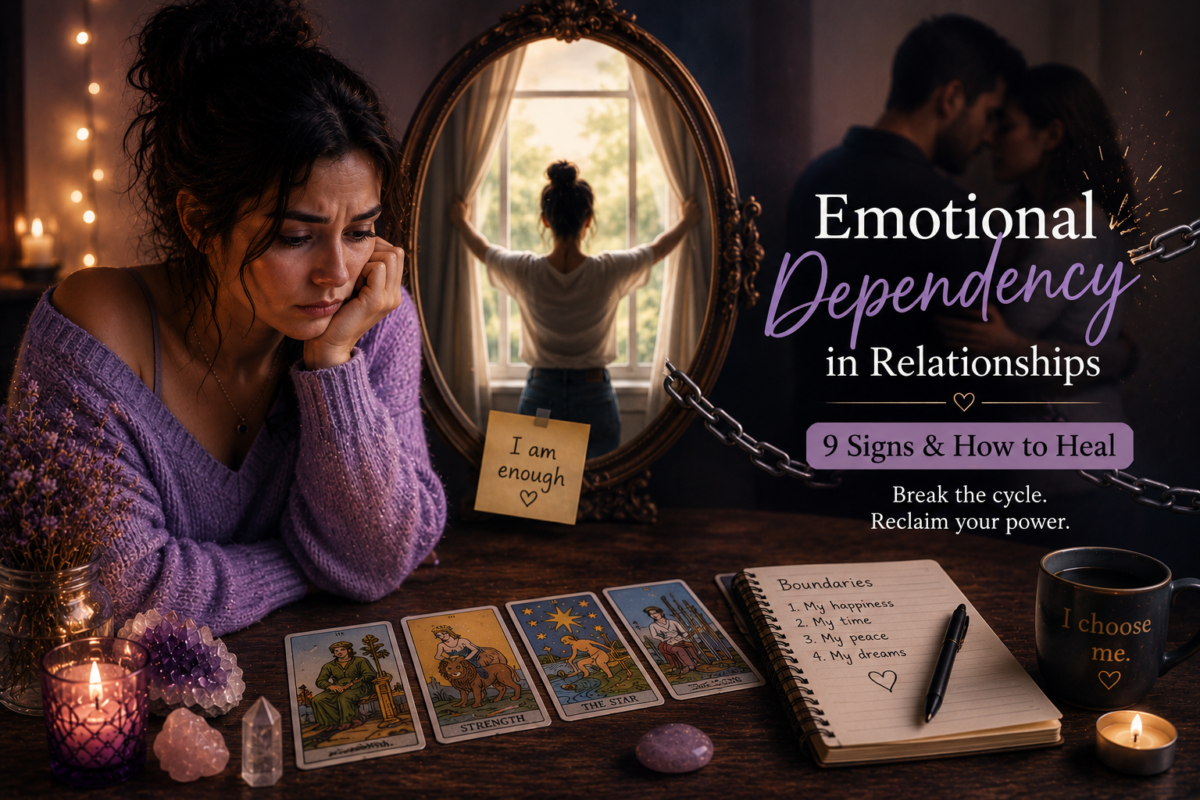
This can sometimes be described as emotional abandonment.
Emotional abandonment doesn’t necessarily mean that someone physically left. A person can be physically present while being emotionally unavailable, disconnected or consistently unresponsive to their partner’s emotional needs.
And recognising the pattern matters because emotional distance can sometimes become normalised before either person realises how disconnected the relationship has become.
What Is Emotional Abandonment in a Relationship?
Emotional abandonment in relationships happens when one person’s emotional needs for connection, attention, understanding, affection or support are repeatedly unmet.
It can look very subtle.
Your partner may not be cruel.
They may not even realise what they’re doing.
But over time, you may begin feeling:
- Unheard
- Unimportant
- Unwanted
- Emotionally disconnected
- Unsupported
- Rejected
- Lonely
- Afraid to express your feelings
Psychology Today notes that emotional abandonment can happen even when partners are physically close, particularly when emotional needs aren’t being met or communication becomes disconnected.
The key word is pattern.
Everyone has days when they’re tired, distracted or emotionally unavailable.
One difficult week doesn’t automatically mean emotional abandonment.
The concern is when emotional disconnection becomes a repeated part of the relationship.
9 Signs of Emotional Abandonment in Relationships
1. You Feel Lonely Even When You’re Together
This is one of the clearest signs.
You spend time together, but you don’t feel connected.
You may sit in the same room, watch something together or eat together, yet still feel emotionally distant.
You start thinking:
“We’re together, so why do I feel alone?”
Physical presence and emotional closeness aren’t always the same thing.
2. You Stop Sharing Your Feelings
At some point, you may start thinking:
“What’s the point of telling them?”
Perhaps previous attempts to communicate were dismissed, criticised or ignored.
So instead of opening up, you keep things to yourself.
You stop saying:
- “That hurt me.”
- “I need more affection.”
- “I’m worried about us.”
- “I feel disconnected.”
- “I need your support.”
Silence can become a form of self-protection.
3. Your Conversations Become Mostly Practical
You still talk.
But what do you talk about?
Bills.
Work.
Food.
Shopping.
Schedules.
Household responsibilities.
Who needs to pick something up.
The relationship may still function practically while emotional intimacy gradually disappears.
A healthy relationship doesn’t require constant deep conversation, but consistently avoiding emotional connection can become a problem.
4. You Don’t Feel Comfortable Being Vulnerable
You have something important to say.
Then you stop yourself.
Why?
Because you already expect the response.
Maybe they’ll say you’re overreacting.
Maybe they’ll become defensive.
Maybe they’ll change the subject.
Maybe they’ll simply not care.
When vulnerability repeatedly feels unsafe, you may eventually stop offering it.
5. Your Partner Doesn’t Seem Interested in Your Inner World
A relationship involves more than knowing what someone did that day.
Emotional connection also involves curiosity.
For example:
“How did that make you feel?”
“Are you okay?”
“What are you worried about?”
“How can I support you?”
When one partner consistently shows little interest in the other’s emotional experience, the relationship can start feeling one-sided.
6. You Have to Ask Repeatedly for Basic Emotional Support
Everyone has different emotional needs.
But if you constantly have to ask for:
- Attention
- Affection
- Reassurance
- Listening
- Quality time
- Emotional support
and nothing meaningfully changes, resentment can develop.
You may begin feeling as though you’re asking someone to care about you.
That’s an exhausting place to be.
7. Conflict Ends in Silence Instead of Repair
Disagreements are normal.
The bigger question is:
What happens afterwards?
Do you eventually talk?
Do both people explain themselves?
Do you apologise when necessary?
Do you understand each other’s perspective?
Or does conflict simply end with:
silence → distance → avoidance → pretending everything is fine?
Repeated emotional shutdown without repair can deepen disconnection.
8. You Feel Unimportant Compared With Everything Else
Work is always more important.
Friends come first.
The phone gets more attention.
Hobbies take priority.
Other people’s problems receive more emotional energy.
Again, having outside responsibilities isn’t automatically unhealthy.
The issue is consistent imbalance.
When one person repeatedly feels like the relationship comes last, emotional loneliness can grow.
9. You Start Questioning Whether Your Feelings Matter
This can be one of the most painful stages.
You begin asking yourself:
“Am I too sensitive?”
“Am I asking for too much?”
“Maybe I’m the problem.”
“Maybe relationships are just supposed to feel like this.”
But your feelings deserve examination rather than automatic dismissal.
You can have emotional needs without being “too needy.”
At the same time, it is also important to communicate those needs clearly rather than expecting a partner to automatically know what you need.
Emotional Abandonment vs Fear of Abandonment
These two ideas sound almost identical, but they are different.
| Fear of Abandonment | Emotional Abandonment |
|---|---|
| Fear that someone will leave | Feeling emotionally left alone |
| Often involves anxiety about losing someone | Involves unmet emotional needs |
| Can happen even in a healthy relationship | Usually involves an ongoing relationship pattern |
| May involve reassurance-seeking | May involve emotional withdrawal |
| Focuses on anticipated loss | Focuses on current disconnection |
Someone can experience fear of abandonment without actually being abandoned.
For example, a delayed text may trigger intense worry even though the relationship is secure.
That distinction is important.
Your existing article Fear of Abandonment in Relationships can be linked here naturally.
Emotional Abandonment vs Emotional Unavailability
These concepts overlap but aren’t exactly identical.
Emotional unavailability generally describes difficulty being emotionally present, vulnerable or accessible.
Emotional abandonment describes the experience of feeling emotionally neglected, unsupported or disconnected.
For example, a person might be emotionally unavailable because they struggle with vulnerability.
Their partner may consequently experience emotional abandonment.
But the two terms shouldn’t automatically be treated as diagnoses.
Why Can Emotional Abandonment Happen?
There isn’t one explanation.
Emotional disconnection can develop because of:
- Poor communication
- Unresolved resentment
- Relationship conflict
- Stress
- Work pressure
- Different schedules
- Lack of quality time
- Fear of intimacy
- Emotional avoidance
- Unspoken expectations
- Long-term disconnection
Psychology Today identifies several possible contributors, including communication problems, unresolved resentment, stress and fear of intimacy.
The important point is that understanding the reason doesn’t automatically excuse the pattern.
Both people still need to be willing to address it.
Does Emotional Abandonment Mean Your Partner Doesn’t Love You?
Not necessarily.
Someone can love you and still be poor at emotional communication.
Someone can care about you while avoiding difficult conversations.
Someone can have feelings for you while struggling with vulnerability.
But love by itself doesn’t automatically create a healthy relationship.
A relationship also needs things like:
- Communication
- Respect
- Emotional responsiveness
- Trust
- Effort
- Boundaries
- Repair after conflict
The question isn’t only:
“Does my partner love me?”
A more useful question may be:
“Can we consistently show up for each other in a way that makes the relationship emotionally healthy?”
What Emotional Abandonment Can Do to a Relationship
If emotional disconnection continues, you may start adapting to it.
You might:
Overthink everything
You analyse every change in tone.
Seek constant reassurance
You need repeated confirmation that everything is okay.
Stop asking for what you need
Because you expect rejection.
Become emotionally dependent
Your partner’s attention starts determining how secure you feel.
Pull away yourself
Eventually, you may decide that vulnerability isn’t worth the disappointment.
This can create a difficult cycle:
Need connection → don’t receive it → become anxious → seek more connection → partner withdraws → feel more abandoned → become even more anxious.
This can overlap with patterns discussed in your Anxious Attachment in Relationships article.
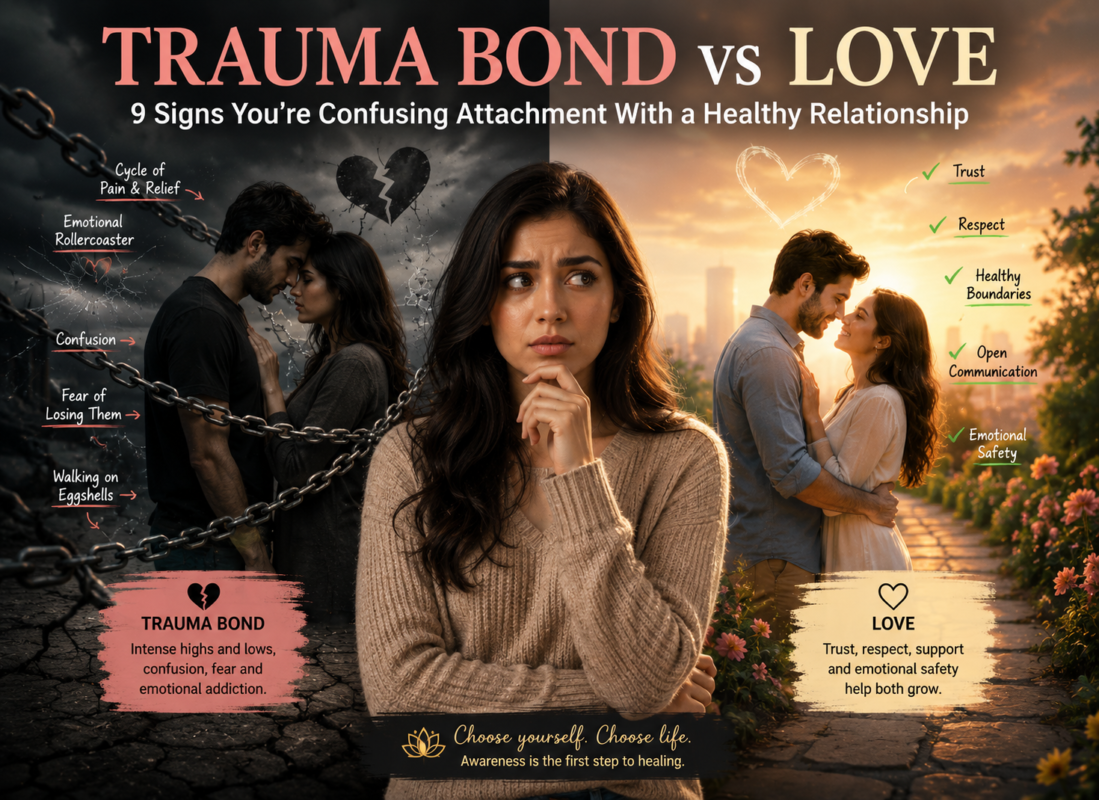
Is Emotional Abandonment the Same as a Trauma Bond?
No.
This distinction is extremely important.
A relationship can contain emotional neglect without being a trauma bond.
A trauma bond generally refers to a strong attachment that develops within a cycle involving harmful or abusive dynamics and intermittent reinforcement.
Emotional abandonment is broader and can occur through chronic emotional disconnection or unmet needs.
For a deeper comparison, link to:
This creates a strong topical relationship between the two articles without making them compete for the exact same keyword.
What Can You Do If You Feel Emotionally Abandoned?
1. Name What You’re Missing
Instead of saying:
“You don’t care about me.”
Try:
“I feel disconnected from you lately, and I need more emotional communication.”
Specific language creates a better starting point for a conversation.
2. Identify Your Actual Emotional Need
Ask yourself:
What do I actually need?
Is it:
- Affection?
- Attention?
- Quality time?
- Reassurance?
- Respect?
- Listening?
- Emotional support?
- More honest communication?
You can’t clearly communicate a need that you haven’t identified.
3. Watch What Happens After You Communicate
This is crucial.
Don’t judge the entire relationship from one conversation.
Look at the pattern afterward.
Does your partner:
- Listen?
- Ask questions?
- Try to understand?
- Make changes?
- Follow through?
- Become defensive and dismissive?
- Ignore the issue completely?
Actions over time tell you more than promises during one emotional conversation.
Can Tarot Help With Emotional Abandonment?
Tarot can be used as a reflective tool when you’re struggling to understand relationship patterns.
Instead of asking:
“Will my partner stop abandoning me?”
Try questions such as:
“What emotional need am I struggling to express?”
“What relationship pattern am I repeating?”
“Where am I ignoring my own boundaries?”
“What am I afraid will happen if I speak honestly?”
“What do I need to understand about this relationship?”
“What would emotional security look like for me?”
This keeps the reading focused on self-awareness and choices rather than trying to predict another person’s behaviour.
7 Tarot Cards for Emotional Relationship Reflection
| Card | Reflection |
|---|---|
| Five of Pentacles | Feeling left out, unsupported or emotionally isolated |
| Five of Cups | Grief, disappointment and focusing on emotional loss |
| Moon | Uncertainty, fear and unclear emotional signals |
| Queen of Cups | Emotional awareness and compassionate self-reflection |
| Four of Cups | Emotional withdrawal or disconnection |
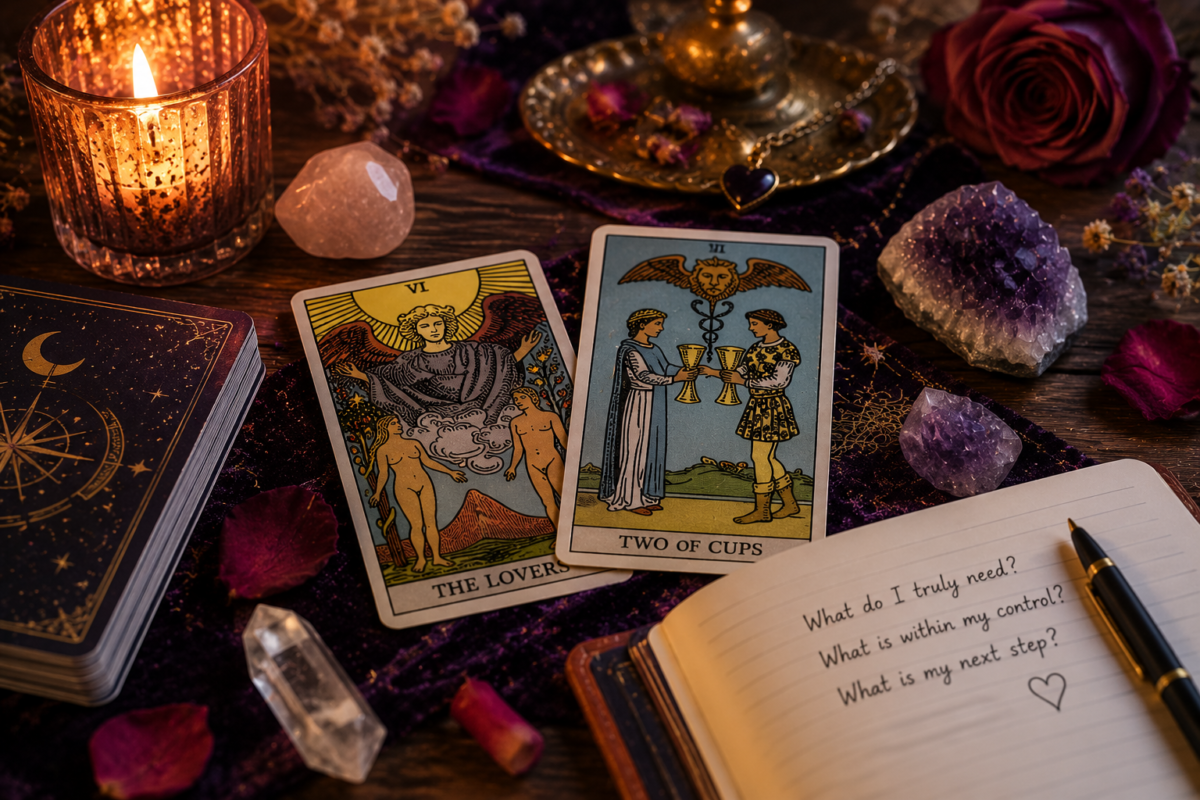
| Two of Cups | Mutual connection and emotional reciprocity |
| Temperance | Balance, patience and emotional regulation |
These aren’t fixed predictions.
Use them as prompts for reflection.
A 6-Card Tarot Spread for Emotional Abandonment
Card 1 – What am I feeling?
Identify your strongest emotion.
Card 2 – What emotional need isn’t being met?
Explore what you’re actually longing for.
Card 3 – What am I afraid of?
Look beneath the immediate reaction.
Card 4 – What relationship pattern am I repeating?
Notice whether the situation connects with your past.
Card 5 – What boundary do I need?
Focus on your own choices.
Card 6 – What would emotional security look like?
Bring the reading back to your future rather than staying trapped in the problem.
When Feeling Alone Doesn’t Mean Your Relationship Is Over
Feeling emotionally disconnected doesn’t automatically mean you should break up.
Some relationships go through periods of distance.
The more useful question is:
Is there willingness to repair the connection?
A relationship may have room to improve when both people are willing to:
- Talk honestly.
- Listen without immediately becoming defensive.
- Acknowledge problems.
- Express emotional needs.
- Make practical changes.
- Rebuild trust.
- Spend intentional time together.
But if one person repeatedly refuses communication, dismisses the other’s needs or makes the other person feel unsafe, it may be necessary to reconsider what the relationship is providing.
When You Should Take the Pattern Seriously
Pay particular attention when emotional neglect exists alongside:
- Manipulation
- Intimidation
- Controlling behaviour
- Threats
- Humiliation
- Deliberate isolation
- Repeated emotional abuse
- Fear of speaking honestly
Those situations go beyond ordinary relationship distance.
If you feel unsafe, seek support from a trusted person or qualified professional.
FAQs
1. What is emotional abandonment in a relationship?
Emotional abandonment is a pattern in which a person feels emotionally unsupported, unseen, unheard or disconnected from their partner despite the relationship continuing physically.
2. What are the signs of emotional abandonment?
Common signs include persistent loneliness within the relationship, lack of emotional communication, feeling unheard, reduced affection, emotional withdrawal and feeling that your needs don’t matter.
3. Can you feel emotionally abandoned even when your partner loves you?
Yes. Love and emotional availability aren’t always the same thing. Someone may care about you but still struggle to communicate, listen or provide emotional support.
4. Is emotional abandonment the same as fear of abandonment?
No. Fear of abandonment is anxiety about being left, while emotional abandonment describes feeling emotionally disconnected or unsupported in a relationship.
5. Can emotional abandonment cause relationship anxiety?
It can contribute to insecurity, overthinking and reassurance-seeking, particularly when emotional needs remain unaddressed.
6. Can Tarot help with emotional abandonment?
Tarot can be used for reflection and self-awareness. It shouldn’t be treated as proof of what your partner secretly thinks or as a replacement for direct communication.
Final Thought
You can be surrounded by someone and still feel alone.
That doesn’t automatically mean your relationship is broken.
But it does mean something deserves your attention.
Instead of asking only:
“Why doesn’t my partner understand me?”
try asking:
“What do I need, have I communicated it clearly, and is there a genuine willingness to meet each other halfway?”
A healthy relationship doesn’t require two people to be emotionally available every second.
It does require both people to be willing to notice the distance, talk about it and work toward connection.
And if you’re using Tarot for guidance, let the cards help you ask deeper questions — while allowing real communication and real behaviour to guide your decisions.