

Have you ever felt that something was wrong in your relationship, even when your partner said everything was fine? Perhaps you noticed a change in their behaviour, received a shorter message than usual, or felt uneasy without knowing why.
Sometimes, these feelings may come from intuition. However, they can also arise from anxiety, past heartbreak, or a fear of losing someone you love.
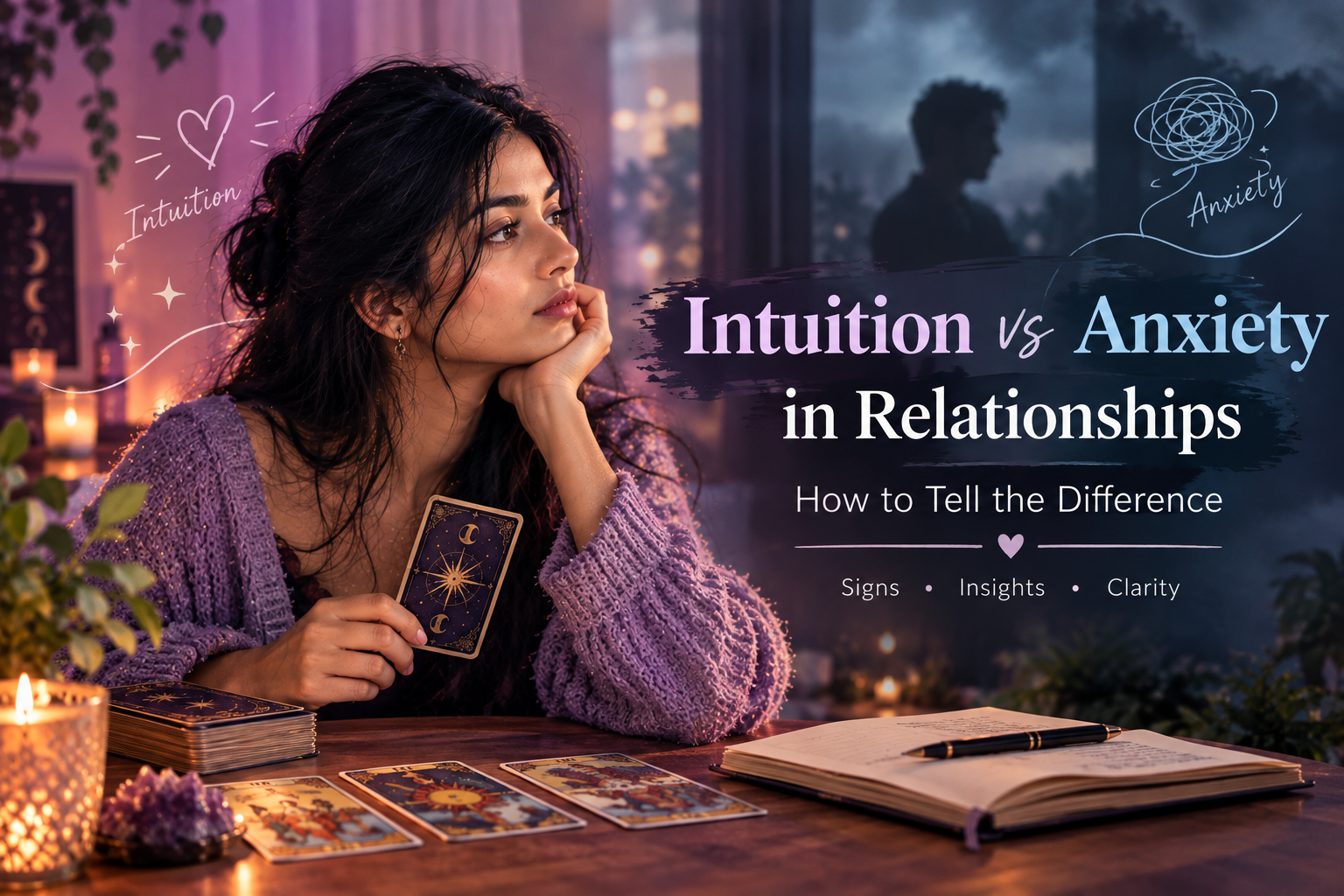
Understanding intuition vs anxiety in relationships can help you respond to your emotions more thoughtfully. Instead of immediately assuming the worst, you can learn to recognise your feelings, examine the available evidence, and communicate your needs clearly.
Although intuition and anxiety can feel similar, they often influence your thoughts and actions in different ways.
What Is Intuition in a Relationship?
Intuition is your immediate sense or impression about a situation, often before you can fully explain why you feel that way. It may develop through your experiences, observations, and ability to recognise patterns in someone’s behaviour.
For example, you might notice that your partner has become less communicative, avoids certain conversations, or behaves differently around you.
You may sense that something needs attention even if you cannot immediately identify the reason.
However, intuition is not proof that your interpretation is correct. Your first impression can still be influenced by assumptions, incomplete information, and past experiences.
Therefore, it is helpful to treat intuition as a reason to pay attention rather than a reason to jump to conclusions.
What Is Relationship Anxiety?
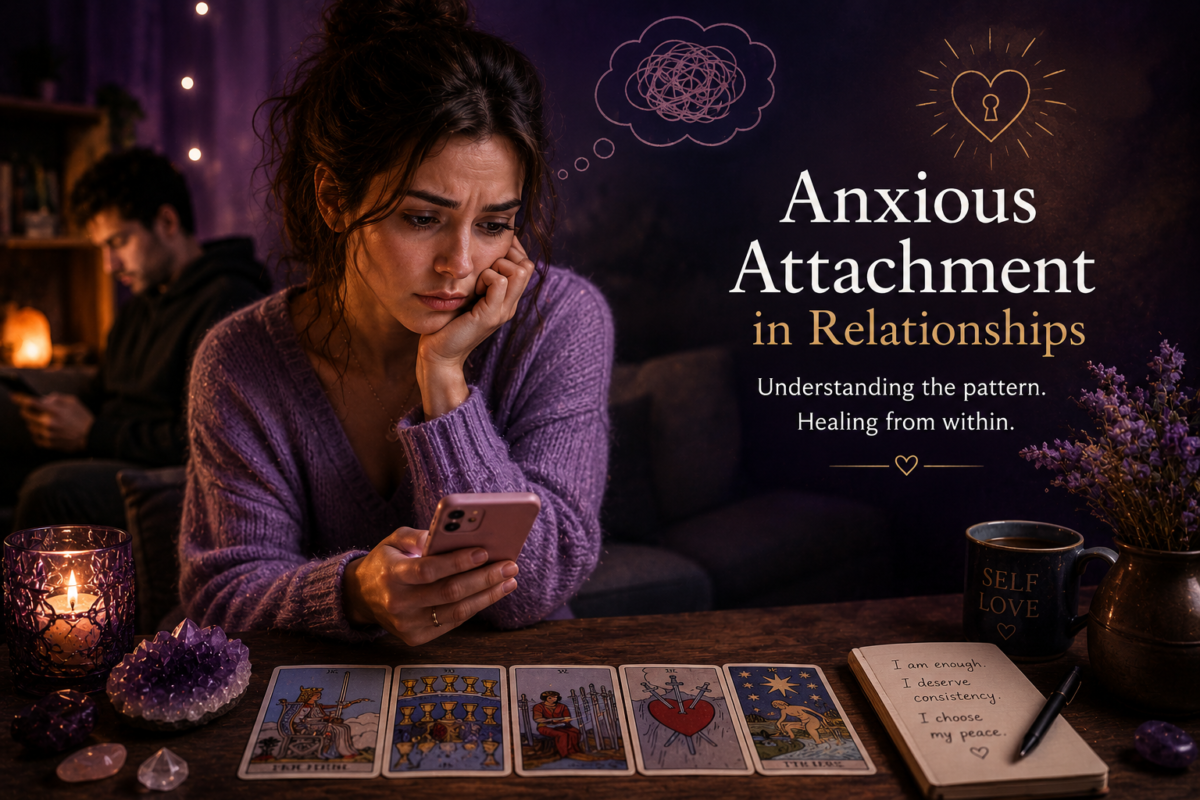
Relationship anxiety involves persistent worry, uncertainty, or fear about your relationship. You might repeatedly question your partner’s feelings, analyse their messages, or worry that they will leave you.
For instance, your partner may take longer than usual to reply to a message. Although there may be several ordinary explanations, your mind might immediately suggest that they have lost interest.
As a result, you may check your phone repeatedly, seek reassurance, or replay previous conversations in your head.
Relationship anxiety can sometimes be connected to past rejection, low self-confidence, difficulty trusting others, or fear of abandonment. Nevertheless, feeling anxious does not automatically mean you have an anxiety disorder.
The important thing is to understand what your emotions are telling you and whether your interpretation matches the available evidence.
Intuition vs Anxiety in Relationships: 7 Key Differences
Although everyone’s experiences are different, the following distinctions may help you understand your emotional responses.
| Sign | Intuition | Anxiety |
|---|---|---|
| 1. Emotional experience | A feeling that something deserves attention | Persistent worry about what might happen |
| 2. Thought patterns | Focuses on a particular observation | Repeatedly imagines multiple negative possibilities |
| 3. Response to uncertainty | Can tolerate not knowing immediately | Often demands an immediate answer |
| 4. Behaviour | Encourages observation and thoughtful communication | May lead to checking, reassurance-seeking, or overanalysing |
| 5. Evidence | May draw attention to patterns you have noticed | Can turn possibilities into seemingly certain conclusions |
| 6. Emotional intensity | May feel noticeable without taking over your day | Can become overwhelming or difficult to manage |
| 7. After reflection | May help you identify a question worth exploring | May generate even more questions and doubts |
These are general patterns, not strict rules. Intuition can feel intense, and anxiety can sometimes draw attention to genuine relationship problems.
Consequently, you should consider the situation as a whole rather than judging a feeling by its intensity alone.
1. Notice Whether You Are Responding to Facts or Possibilities
First, examine what happened before the feeling appeared.
Did your partner cancel plans several times without explanation? Have they stopped communicating openly? Or did they simply respond late to one message?
These situations are not necessarily equivalent.
When you experience uncertainty, separate what you observed from what you fear it means.
For example:
- Fact: Your partner has not replied for four hours.
- Interpretation: They may be losing interest.
- Fear: They will leave me for someone else.
This simple exercise helps you distinguish an observable event from the story your mind creates around it.
Moreover, it gives you an opportunity to consider alternative explanations before reacting.
2. Ask Whether the Feeling Comes From the Present or the Past
Past experiences can influence how you interpret current relationships.
If someone previously betrayed your trust, you might become particularly sensitive to changes in communication. Similarly, if you experienced rejection or emotional inconsistency growing up, uncertainty in a relationship may feel especially uncomfortable.
However, a familiar feeling does not always indicate that the same situation is happening again.
When an uncomfortable emotion appears, ask yourself:
- Has something specific happened in my current relationship?
- Does this remind me of an earlier experience?
- Am I responding to my partner’s actual behaviour or anticipating a painful outcome?
- What information would help me understand the situation more clearly?
These questions do not invalidate your feelings. Instead, they help you understand their possible origins.
If relationship worries repeatedly interfere with your daily life, speaking with a qualified mental health professional may help you explore these patterns.
3. Recognise When Overthinking Takes Control
Sometimes, one unanswered question can lead to dozens of new concerns.
You might wonder whether your partner still loves you, whether their feelings have changed, or whether you did something wrong. Even after receiving reassurance, you may find yourself questioning the same things again.
In such situations, the search for certainty can become exhausting.
You may find our guide on how to stop overthinking in a relationship helpful for understanding these patterns.
Rather than trying to solve every uncertainty immediately, pause and identify the specific concern that needs attention.
For example, instead of asking yourself, “Does my partner still love me?” you might ask, “Have we been communicating openly about our needs lately?”
The second question gives you something concrete to discuss or observe.
4. Pay Attention to Patterns, Not Isolated Moments
One difficult conversation does not necessarily indicate a relationship problem. Similarly, one affectionate message cannot resolve a long-standing pattern of disrespect.
Therefore, consider behaviour over time.
Does your partner generally keep their promises? Can you discuss uncomfortable topics without being dismissed? Do their actions reflect the commitments they make?
These questions can provide more useful information than repeatedly analysing individual messages or gestures.
At the same time, do not ignore behaviour that consistently makes you feel unsafe, disrespected, or emotionally unsettled.
Healthy relationship awareness involves both emotional understanding and attention to real-world behaviour.
5. Learn to Sit With Uncertainty
Love naturally involves some uncertainty. You cannot know every thought your partner has, predict every future event, or guarantee that a relationship will always remain the same.
Trying to eliminate all uncertainty may actually increase your distress.
Instead, practise pausing before seeking immediate reassurance.
Take a few slow breaths, write down your concern, and give yourself time to consider what you know. If a genuine issue remains, choose a calm moment to discuss it.
Over time, this approach can help you respond to difficult feelings without allowing them to dictate every decision.
6. Use Tarot for Reflection, Not Absolute Certainty
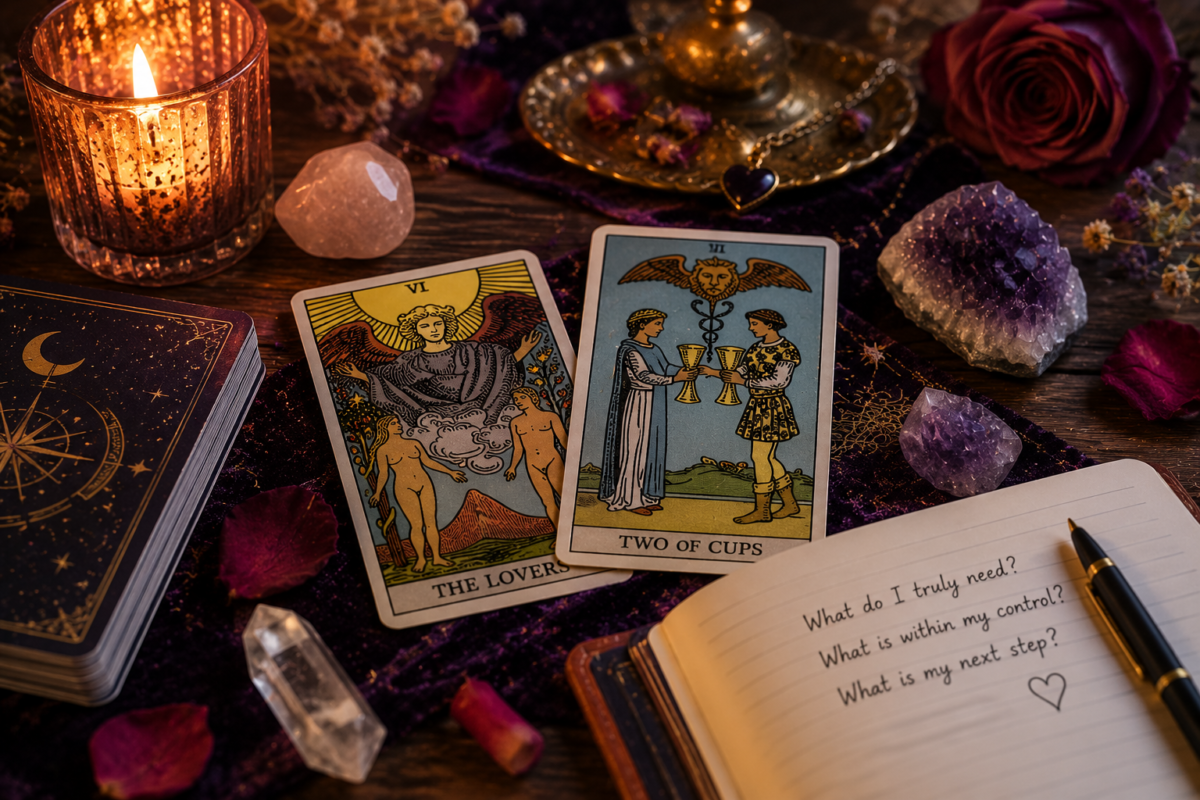
When relationship questions become confusing, Tarot can offer a structured way to reflect on your emotions, expectations, and choices.
For example, a reading might encourage you to consider whether you feel emotionally secure, whether your boundaries are being respected, or what kind of communication you need.
However, Tarot cannot reliably verify another person’s private thoughts or establish whether your suspicions are true.
Rather than asking only, “What is my partner secretly thinking?” consider questions that return your attention to your own experience:
- What am I feeling in this relationship?
- What pattern do I need to understand?
- What am I afraid to communicate?
- What can I do to create greater emotional clarity?
You can also explore our guide to Tarot for relationship clarity for more reflective questions.
For additional guidance, a love Tarot reading online can be approached as an opportunity for self-reflection rather than a guaranteed prediction about someone else’s feelings.
7. Communicate Instead of Guessing
Ultimately, you cannot build lasting trust by interpreting every silence, facial expression, or change in texting habits.
When something concerns you, describe the behaviour you have noticed and explain how it affects you.
For example, you could say:
“I have noticed that we have been talking less lately, and I feel uncertain about where we stand. Can we talk about what has changed?”
This approach creates space for an honest conversation without accusing the other person of something you cannot yet establish.
Of course, communication requires participation from both people. If your concerns are repeatedly dismissed or your partner refuses to discuss important relationship issues, that pattern deserves attention too.
Your goal is not to suppress your intuition. It is to combine emotional awareness with clear communication, reasonable boundaries, and observable evidence.
How Can You Tell Whether Your Gut Feeling Is Trustworthy?
There is no perfect test that separates intuition from anxiety in every situation. Nevertheless, you can use a few practical questions to slow down your response.
| Question | Why it helps |
|---|---|
| What actually happened? | Separates observations from assumptions |
| What evidence supports my concern? | Helps you evaluate your interpretation |
| Could there be another explanation? | Reduces premature conclusions |
| Is this a recurring pattern? | Places individual events in context |
| What action would help me gain clarity? | Turns worry into a constructive next step |
Importantly, you do not need to prove that a feeling is intuition before taking care of yourself. If something feels uncomfortable, you can ask questions, establish boundaries, and seek support without assuming that your first interpretation must be correct.
Frequently Asked Questions
1. Can anxiety feel like intuition in a relationship?
Yes. Anxiety can create a strong sense that something is wrong, particularly when you fear rejection or have experienced betrayal. The intensity of a feeling does not establish whether your interpretation is accurate. Examine the evidence and consider alternative explanations.
2. How do I know if my gut feeling about someone is right?
Look for consistent behaviour, meaningful changes, and information that supports your concern. You can take your feelings seriously without treating them as proof. Honest communication may help you understand the situation more clearly.
3. Can past heartbreak affect intuition?
Yes. Previous experiences can influence how you recognise and respond to relationship patterns. Sometimes they help you notice warning signs; at other times, they can make uncertain situations feel threatening. Reflection can help you distinguish the two possibilities.
4. Can Tarot help with relationship anxiety?
Tarot may provide prompts for exploring emotions, boundaries, and relationship choices. However, it cannot diagnose anxiety or reliably confirm another person’s private feelings. If anxiety is persistent or overwhelming, consider support from a qualified mental health professional.
5. Should I ignore my intuition if I have relationship anxiety?
No. You do not need to dismiss your feelings. Instead, acknowledge them, examine what may be contributing to them, and look at the situation objectively. Both emotional awareness and evidence can help you make thoughtful decisions.
Final Thoughts
Understanding intuition vs anxiety in relationships begins with recognising that your feelings deserve attention, but they do not always tell the whole story.
Sometimes, discomfort may encourage you to notice a genuine problem. At other times, it may reflect uncertainty, past hurt, or fear about what could happen next.
Rather than immediately trusting or rejecting a feeling, give yourself time to understand it. Observe patterns, communicate honestly, and establish boundaries that support your emotional well-being.
Most importantly, remember that you do not need to predict every outcome to make healthy relationship choices. You can move forward with greater clarity even when some questions remain unanswered.
Want to explore your relationship feelings more deeply? Visit The Astro Palace to explore Tarot guidance for relationship reflection and emotional clarity.