

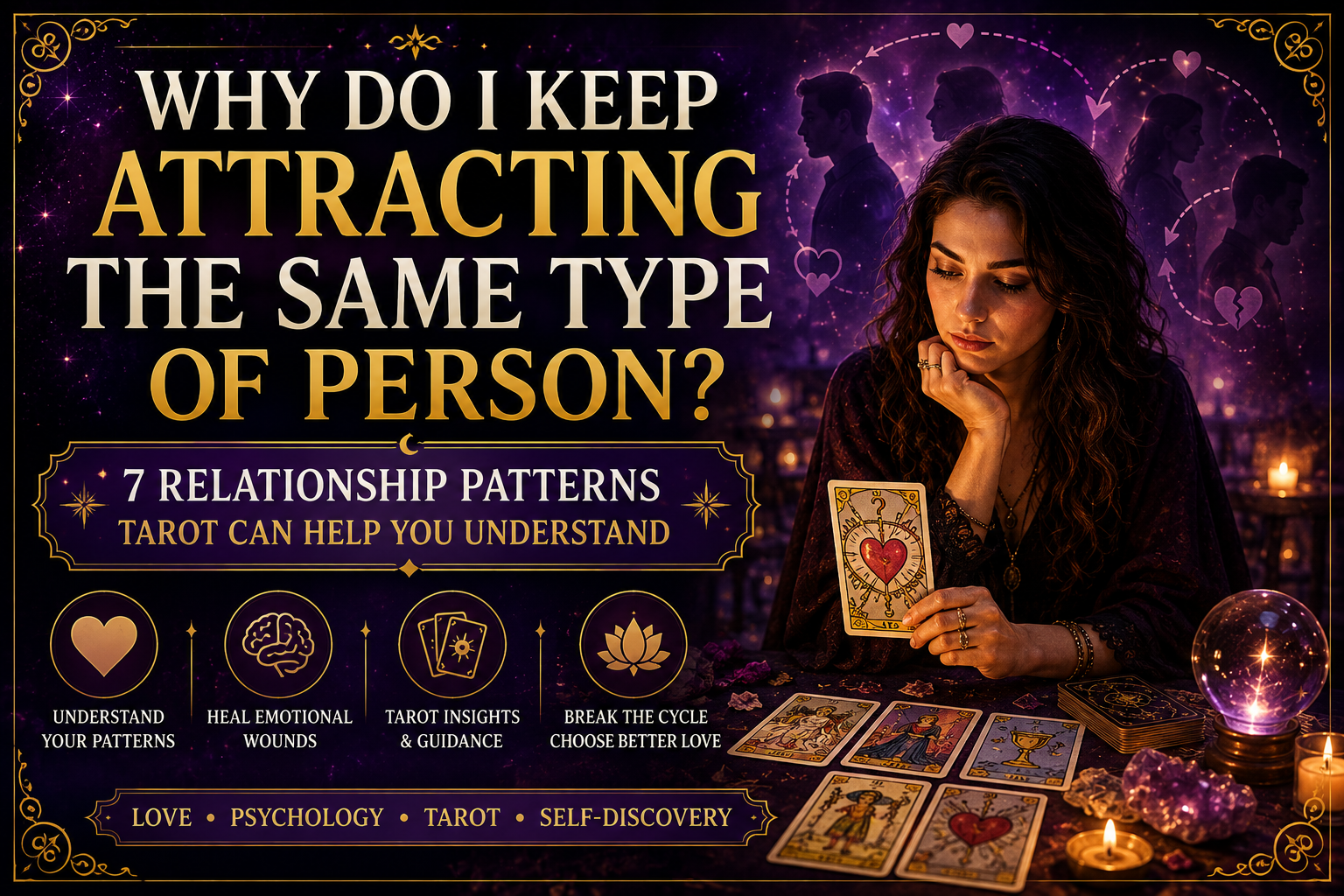
Same relationship patterns can be difficult to recognize when every relationship seems different. You may date different people, experience different circumstances, and still find yourself facing the same emotional problems again and again.
“How did I end up with the same kind of person again?”
Maybe one partner was emotionally unavailable.
Another was inconsistent.
Another gave you intense attention at first and then suddenly became distant.
The names changed.
The circumstances changed.
But somehow, the emotional story felt familiar.
This can be one of the most frustrating experiences in love.
You may tell yourself:
“This time will be different.”
And sometimes it is.
But if you repeatedly find yourself in relationships with similar dynamics, it may be worth looking beyond the individual person and asking:
“What relationship pattern am I repeating?”
Psychology has long explored why people can repeat familiar relationship dynamics. Attachment theory, for example, examines characteristic ways people relate to others in close relationships, while contemporary psychological writing also discusses recurring patterns, boundaries and learned expectations in relationships.
Tarot can offer another perspective.
Not as a diagnostic tool.
Not as proof that someone is your soulmate.
And not as a way to blame yourself.
Instead, Tarot can act as a mirror for self-reflection, helping you explore your emotional needs, expectations, boundaries and choices.
What Does It Mean to Keep Attracting the Same Type of Person?
First, let’s clear up an important misconception.
You aren’t necessarily “attracting” people because of some mysterious energy.
Sometimes the pattern is actually about who feels familiar, what you tolerate, what you overlook, what you interpret as chemistry, and when you choose to stay or leave.
For example, you might repeatedly choose people who:
- Struggle with emotional availability
- Give inconsistent attention
- Avoid commitment
- Need constant reassurance
- Have difficulty communicating
- Make you feel like you have to earn their love
- Create intense chemistry but little stability
That doesn’t mean you consciously want unhealthy relationships.
Sometimes familiar behavior simply feels easier to understand because you’ve experienced it before.
Psychological perspectives on repeating relationship patterns often examine attachment, learned expectations and recurring interpersonal behaviors.
And this is where self-awareness becomes powerful.
7 Signs You’re Repeating the Same Relationship Patterns
1. The People Change, but the Problem Doesn’t
Your partners have different personalities.
Different careers.
Different backgrounds.
Different stories.
Yet you keep experiencing the same issue.
For example:
Partner 1: Emotionally unavailable.
Partner 2: Emotionally unavailable.
Partner 3: Extremely affectionate at first, then emotionally distant.
The people aren’t identical.
But the relationship dynamic may be.
Tarot reflection
Ask:
“What pattern keeps appearing in my relationships?”
Pull one card.
Don’t immediately search for a prediction.
Instead, write down your first reaction.
What does the card make you think about?
2. You Confuse Intensity With Compatibility
Some relationships feel incredibly powerful from the beginning.
Constant messages.
Late-night conversations.
Strong physical attraction.
Emotional highs.
Feeling like you’ve known someone forever.
It can feel like:
“This must be something special.”
But intensity doesn’t automatically equal compatibility.
A healthy relationship also needs things like:
- Trust
- Communication
- Respect
- Consistency
- Shared values
- Emotional safety
Tarot question:
“What is the difference between chemistry and compatibility in this connection?”
This is a much more useful question than simply asking:
“Are they my soulmate?”
3. You Keep Trying to Earn Someone’s Love
Do you find yourself thinking:
“If I am patient enough, they’ll open up.”
Or:
“If I support them enough, they’ll finally choose me.”
Or:
“Maybe once they realize how much I care, they’ll change.”
This can create an exhausting dynamic where love becomes something you have to prove yourself worthy of.
A relationship shouldn’t require you to constantly audition for someone’s attention.
Tarot reflection
Ask:
“Where am I trying to earn love instead of receiving mutual love?”
This question can reveal much more than:
“Do they love me?”
4. You Ignore the Early Warning Signs
Sometimes the pattern isn’t invisible.
The signs were there.
Maybe they:
- Avoided difficult conversations
- Disrespected boundaries
- Disappeared whenever intimacy increased
- Made promises without action
- Kept you confused about the relationship
- Were inconsistent with communication
But attraction can make warning signs easier to rationalize.
You might think:
“They’re just scared.”
“They’re busy.”
“They’ve been hurt before.”
“I’ll give them some time.”
Understanding someone’s behavior doesn’t mean you have to accept behavior that hurts you.
5. You Feel Most Attracted When Someone Is Unavailable
This is one of the most interesting patterns to explore.
Sometimes emotional distance can create uncertainty.
And uncertainty can create obsession.
You don’t know where you stand.
So you think about the person more.
You check your phone.
You analyze their messages.
You wonder what they’re feeling.
You search for signs.
And suddenly:
uncertainty feels like chemistry.
If you’ve experienced this, don’t judge yourself.
Instead ask:
“What does emotional uncertainty make me feel?”
And:
“Would I still be attracted to this person if they were consistently available?”
6. You Become the “Fixer”
Maybe you repeatedly choose people who need healing.
They have unresolved issues.
They don’t trust easily.
They have commitment fears.
They’re dealing with emotional wounds.
And you naturally step into the role of:
the understanding one.
the patient one.
the healer.
the person who stays.
Compassion is valuable.
But a romantic relationship shouldn’t become a rehabilitation project.
You can support someone without taking responsibility for changing them.
7. You Leave Only After You Are Completely Exhausted
Another common pattern is staying too long.
You keep hoping.
You keep explaining.
You keep forgiving.
You keep waiting.
And eventually you leave only after you’ve reached emotional exhaustion.
Then you meet someone new.
And the cycle begins again.
A healthier approach is learning to notice your boundaries before you’re completely depleted.
Why Do We Repeat the Same Relationship Patterns?
There isn’t one explanation for every person.
Relationships are complicated.
But several factors can contribute to recurring patterns.
Familiarity
Sometimes familiar behavior can feel comfortable even when it isn’t healthy.
Attachment Patterns
Attachment theory provides one framework for understanding how people approach closeness, trust, independence and emotional security.
Learned Relationship Expectations
Our experiences can influence what we expect love to look like.
Boundaries
If you repeatedly ignore your own boundaries, similar dynamics may continue.
Recent psychological writing on repeating relationship patterns emphasizes the importance of boundaries and recognizing recurring interpersonal dynamics.
Self-Worth
If you believe you must earn love, you may tolerate situations where you’re receiving very little emotional reciprocity.
But none of these factors mean:
“This is just who I am.”
Patterns can change.
How Tarot Can Help You Understand Repeating Relationship Patterns
Tarot shouldn’t be used to diagnose your personality or determine your attachment style.
Instead, use it to ask better questions.
For example:
Instead of:
❌ “Why does everyone leave me?”
Try:
✅ “What do I need to understand about my relationship patterns?”
Instead of:
❌ “Is this person my soulmate?”
Try:
✅ “What is this connection teaching me about love?”
Instead of:
❌ “Will they change?”
Try:
✅ “What am I accepting that I actually need to reconsider?”
Instead of:
❌ “Do they secretly love me?”
Try:
✅ “What does this relationship need for me to feel emotionally secure?”
Relationship Tarot guidance increasingly emphasizes questions focused on your own choices, needs and observable relationship dynamics rather than trying to obtain certainty about another person’s private thoughts.
7 Tarot Cards to Reflect on Relationship Patterns
These aren’t official “relationship pattern cards.”
Instead, think of them as reflection prompts.
The Devil – What Keeps Me Attached?
The Devil can invite reflection around attachment, temptation, unhealthy cycles and behaviors that are difficult to release.
Ask:
“What am I holding onto even though I know it isn’t helping me?”
The Moon – What Am I Not Seeing Clearly?
The Moon can represent uncertainty, fears, assumptions and things that aren’t fully understood.
Ask:
“Am I responding to reality or to my fears?”
This is especially useful when you are overthinking someone’s behavior.
The Lovers – What Am I Choosing?
The Lovers isn’t simply a “love card.”
It can also represent choices and alignment with values.
Ask:
“Does this relationship reflect the kind of love I actually want?”
Justice – Is This Relationship Balanced?
Justice can encourage you to examine fairness, accountability and consequences.
Ask:
“Is the effort between us balanced?”
Queen of Cups – How Am I Caring for Myself?
The Queen of Cups can invite emotional awareness and compassion.
Ask:
“Am I giving myself the same emotional care I give other people?”
Eight of Cups – What Am I Afraid to Leave?
The Eight of Cups can represent walking away from something that no longer provides emotional fulfillment.
Ask:
“What am I staying in because I’m afraid of what comes next?”
The World – What Cycle Is Ready to End?
The World can represent completion and closure.
Ask:
“What relationship lesson am I ready to stop repeating?”
A 7-Card Tarot Spread for Repeating Relationship Patterns
Try this spread when you notice the same emotional situation appearing again.
Card 1 – My Repeating Pattern
What dynamic keeps showing up in my relationships?
Card 2 – My Emotional Trigger
What tends to activate this pattern?
Card 3 – What I Usually Ignore
What warning sign or truth do I tend to overlook?
Card 4 – What I Am Seeking
What emotional need am I trying to fulfill?
Card 5 – What I Need to Release
What belief or behavior is no longer serving me?
Card 6 – My Healthier Choice
What can I do differently this time?
Card 7 – My Relationship Lesson
What am I learning about myself through this pattern?
This kind of spread keeps the reading focused on self-awareness and agency.
Relationship Tarot spreads can similarly be structured around communication, disconnection, strengths and what each person can contribute to improving a relationship.
Why “Healthy” Can Feel Boring After Chaotic Relationships
This is something many people struggle to understand.
If you’ve become accustomed to emotional highs and lows, consistency may initially feel strange.
A calm relationship may not produce:
- Constant anxiety
- Waiting for messages
- Dramatic reunions
- Fear of losing someone
- Emotional rollercoasters
And because there is less uncertainty, you might mistakenly think:
“There isn’t enough chemistry.”
But sometimes what feels unfamiliar isn’t boring.
It is simply peaceful.
This is why it’s important to distinguish between:
intensity
and
intimacy.
They’re not the same thing.
How to Break the Same Relationship Pattern
Understanding the pattern is only the beginning.
The real change happens when your behavior changes.
1. Slow Down
Don’t rush emotional investment.
Give yourself time to observe consistency.
2. Watch Actions
Words matter.
But repeated behavior tells you much more.
3. Identify Your Non-Negotiables
Decide what you need before you’re emotionally attached.
4. Notice Your Triggers
When anxiety appears, pause before reacting.
Ask:
“What happened?”
Then:
“What story am I telling myself about what happened?”
5. Stop Trying to Rescue People
Someone else’s healing isn’t your responsibility.
6. Practice Direct Communication
Instead of guessing what someone means, ask.
7. Choose Consistency Over Potential
Don’t fall in love only with who someone could become.
Pay attention to who they are now.
What If You Keep Attracting Emotionally Unavailable People?
If this feels familiar, don’t immediately conclude that something is wrong with you.
Instead, examine the pattern.
Ask:
- What initially attracts me to these people?
- What behavior do I excuse?
- How quickly do I become emotionally invested?
- Do I feel more attracted when someone pulls away?
- Do I confuse being needed with being loved?
- What happens when someone actually becomes emotionally available?
And if this is a recurring experience, continue with our guide on why you keep attracting emotionally unavailable partners.
Final Thoughts
You may not be repeating the same relationship because you’re destined to.
You may be repeating a familiar emotional pattern.
And familiar doesn’t always mean healthy.
The good news is that patterns become easier to change once you can recognize them.
Maybe your next relationship doesn’t need to feel like a dramatic love story.
Maybe it needs to feel:
safe.
consistent.
mutual.
respectful.
emotionally available.
So the next time you pull your Tarot cards and ask:
“Why do I keep attracting the same type of person?”
Consider asking an even more powerful question:
“What can I choose differently this time?”
Because you may not be able to control who enters your life.
But you can become more conscious of who you choose, what you accept, and when you walk away.
FAQs
Repeated relationship patterns can involve familiarity, learned expectations, attachment patterns, boundaries, emotional needs and the choices we make in relationships. It doesn’t necessarily mean you consciously want the same type of person.
Tarot can be used as a self-reflection tool to explore recurring emotions, relationship dynamics, boundaries and choices. It should not be treated as a psychological diagnostic test.
There isn’t one official card for repeating relationship patterns. The Devil, Moon, Wheel of Fortune, Eight of Cups and World can all provide useful reflection prompts depending on the question and reading.
The Devil can invite reflection on attachment, temptation, dependency, unhealthy cycles or behaviors that are difficult to release. It does not automatically mean that a relationship is toxic.
Tarot cannot establish a factual psychological reason. However, it can help you reflect on your relationship choices, boundaries, emotional needs and recurring experiences.
If you’re accustomed to emotional uncertainty or intense highs and lows, consistency can initially feel unfamiliar. Calmness isn’t necessarily a lack of chemistry; it can also be a sign of emotional stability.
Start by identifying recurring behaviors, noticing early warning signs, establishing boundaries, communicating directly and paying attention to consistency rather than potential.
Tarot can help you reflect on your feelings and options, but it shouldn’t make the decision for you. Consider real-world behavior, communication, boundaries, compatibility and your wellbeing.
3 thoughts on “Why Do I Keep Attracting the Same Type of Person? Tarot & Relationship Patterns”