


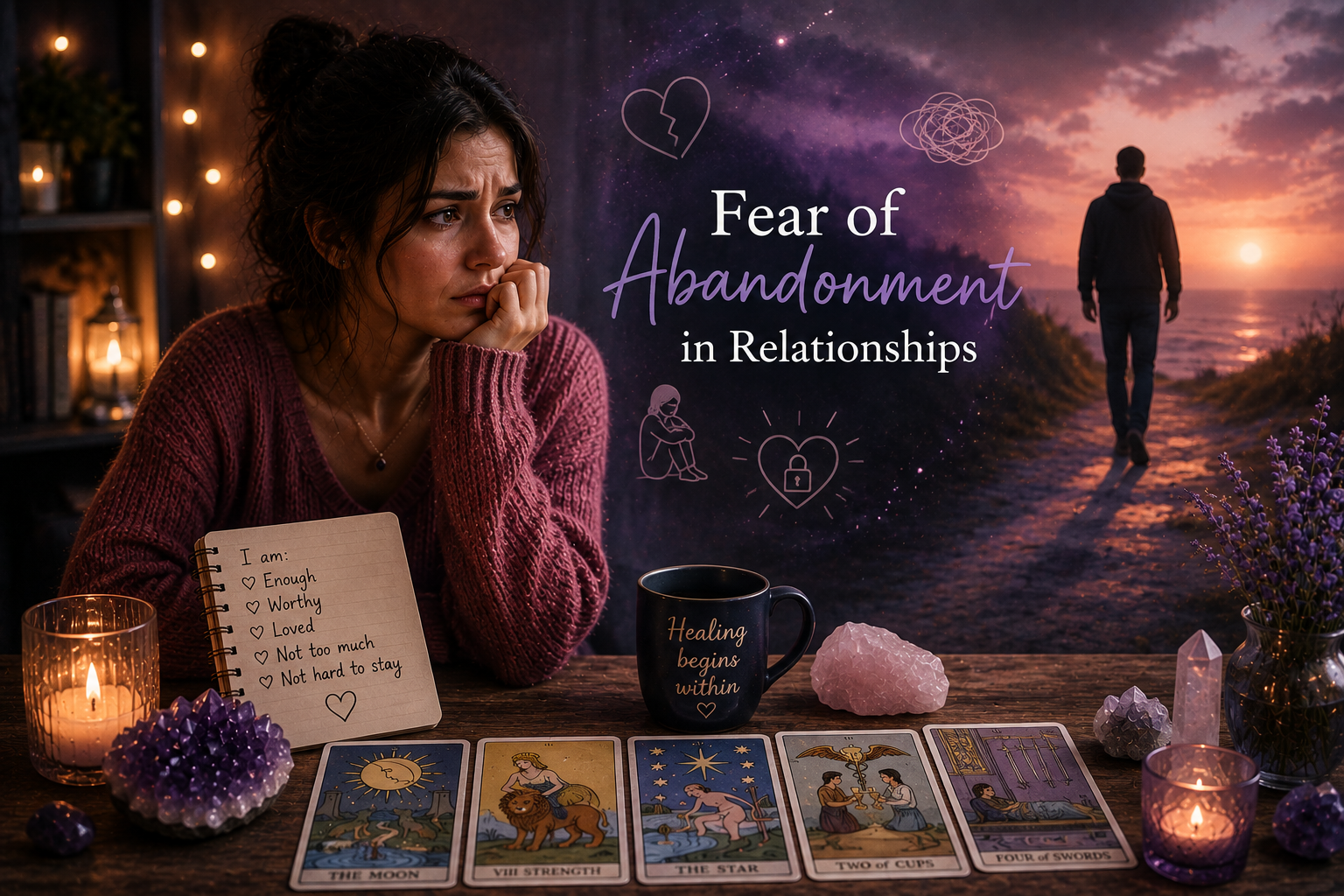
Have you ever been in a relationship that was going well, yet a small change suddenly made you afraid it was ending?
Maybe your partner took longer to reply.
Maybe they seemed quieter than usual.
Maybe they wanted some time alone.
And suddenly your mind started asking:
“Are they losing interest?”
“What if they leave me?”
“Did I do something wrong?”
“What if I become attached and they eventually abandon me?”
This can be a sign that fear of abandonment in relationships is affecting the way you experience love.
Fear of abandonment isn’t a diagnosis by itself. It describes a persistent fear of being left, rejected or emotionally disconnected from someone important. It can be connected with attachment patterns, previous losses, difficult relationships and other emotional experiences.
The important thing is that having this fear doesn’t mean you’re weak, needy or incapable of having a healthy relationship.
It means there may be an emotional pattern worth understanding.
What Is Fear of Abandonment in Relationships?
Fear of abandonment is the worry that someone you love will leave, reject you, stop caring about you or become emotionally unavailable.
Sometimes the fear is connected to something that actually happened.
Other times, the fear appears even when there is no clear evidence that the relationship is in danger.
For example:
Your partner doesn’t reply for four hours.
Fact: They haven’t replied.
Fear: “They’re probably losing interest.”
Story: “They’ll eventually leave me.”
Reaction: You send multiple messages or start checking their online activity.
This difference between what happened and what your fear predicts is extremely important.
Current psychology resources describe abandonment fear as something that can lead to hypervigilance, reassurance-seeking, withdrawal and relationship difficulties.
9 Signs of Fear of Abandonment in Relationships
1. You Constantly Worry Your Partner Will Leave
Even when everything seems fine, part of you is waiting for the relationship to fall apart.
You may think:
“What if they suddenly change their mind?”
“What if they meet someone better?”
“What if they stop loving me?”
The relationship may be safe in the present, but your mind keeps preparing for an imagined future loss.
2. A Delayed Reply Can Trigger Strong Anxiety
A normal delay can feel emotionally significant.
You check your phone.
Then Instagram.
Then WhatsApp.
Then the last conversation.
You start searching for clues.
Did their tone change?
Did I say something wrong?
Why are they online but not replying?
This kind of hypervigilance can turn ordinary relationship uncertainty into emotional distress.
3. You Need Constant Reassurance
You may frequently ask:
“Are we okay?”
“Do you still love me?”
“You’re not going anywhere, right?”
Reassurance can feel calming.
But sometimes the relief doesn’t last.
A few hours later, the same fear returns.
This can create a cycle:
Fear → Reassurance → Temporary Relief → Fear Again
Learning to recognize this cycle is more useful than blaming yourself for needing reassurance.
4. You Become Extremely Sensitive to Emotional Distance
Your partner says:
“I need some time alone.”
Your mind hears:
“I don’t want you anymore.”
Those aren’t necessarily the same thing.
Healthy relationships include individuality and personal space.
The challenge is learning to distinguish actual relationship problems from fear-based interpretations.
5. You Try Too Hard to Keep Someone Interested
Fear of abandonment can sometimes make people change themselves to prevent rejection.
You may:
- agree with everything your partner says
- hide your real feelings
- avoid difficult conversations
- constantly be available
- cancel your own plans
- tolerate behavior you normally wouldn’t accept
You may think:
“If I become the perfect partner, they won’t leave.”
But a healthy relationship shouldn’t require you to abandon yourself to prevent someone else from abandoning you.
6. You Feel Jealous or Threatened Easily
A partner talking to someone else can trigger thoughts like:
“What if they like them more?”
“What if I’m being replaced?”
Some jealousy is normal.
But when fear causes constant monitoring, accusations or checking, it can create problems that didn’t previously exist.
7. You Push People Away Before They Can Leave
Fear of abandonment doesn’t always look like chasing.
Sometimes it looks like leaving first.
You may think:
“I’ll end it before they get the chance to hurt me.”
This is sometimes described as a form of self-protection.
The logic becomes:
If I leave first, I won’t experience being abandoned.
But protecting yourself from possible rejection can also prevent genuine intimacy.
8. You Stay in Unhealthy Relationships Because Being Alone Feels Worse
Sometimes fear of abandonment can make someone tolerate:
- inconsistent communication
- disrespect
- emotional unavailability
- repeated disappointment
- poor boundaries
- unhealthy relationship patterns
The thought becomes:
“At least they’re still here.”
But someone being present isn’t automatically the same as someone being good for you.
This is an important distinction.
9. You Struggle to Let Go
Even when a relationship is clearly hurting you, letting go can feel impossible.
You may keep thinking about:
- what they used to be like
- the good memories
- what the relationship could become
- the future you imagined
- the possibility that they might return
This connects directly with your existing article.
Fear of Abandonment vs Anxious Attachment
These concepts overlap, but they’re not exactly the same.
| Fear of Abandonment | Anxious Attachment |
|---|---|
| Fear of being left | Broader attachment pattern |
| Can appear after painful experiences | Often involves relationship patterns around closeness and security |
| May focus strongly on rejection | May involve reassurance-seeking and sensitivity to distance |
| Can affect different relationships | Often discussed specifically in attachment contexts |
| May occur temporarily | Can become a recurring relational pattern |
This is excellent for building a content cluster.
Fear of Abandonment vs Intuition
This is one of the most valuable sections for The Astro Palace.
Because your audience is interested in intuition, the reader may wonder:
“Is my feeling telling me something is wrong, or am I simply afraid?”
There isn’t a perfect test.
But consider the difference.
| Fear | Intuition |
|---|---|
| Often feels urgent | Can feel quieter |
| Creates repeated “what if?” thoughts | May feel like a simple observation |
| Wants immediate reassurance | Can tolerate waiting |
| Searches for evidence | Doesn’t necessarily need constant evidence |
| Often imagines worst-case scenarios | Can remain grounded in present facts |
| May repeat the same question | Can lead to a clear next step |
Importantly, intuition isn’t automatically correct just because it feels strong.
Use both your feelings and observable behavior.
Why Does Fear of Abandonment Develop?
There isn’t one universal cause.
It can be influenced by experiences such as:
- inconsistent emotional support
- significant loss
- rejection
- difficult childhood experiences
- divorce or separation
- betrayal
- emotionally unpredictable relationships
- repeated relationship endings
Psychology sources emphasize that abandonment fears can be learned through earlier experiences and may become patterns that continue into adult relationships.
But you don’t need to identify one dramatic event to validate what you’re feeling.
Sometimes repeated smaller experiences can influence how safe relationships feel.
The Abandonment Cycle
Fear of abandonment can create a cycle that looks like this:
Trigger
Your partner becomes less responsive.
↓
Interpretation
“They’re losing interest.”
↓
Emotion
Fear and anxiety.
↓
Behavior
Checking, texting, questioning or withdrawing.
↓
Partner’s reaction
They may feel pressured or overwhelmed.
↓
More distance
↓
Your fear feels confirmed.
This kind of cycle is also discussed in current explanations of relationship anxiety.
The key is learning to interrupt the cycle before fear becomes behavior.
How Fear of Abandonment Can Affect Your Relationships
It can sometimes lead to:
- overthinking
- jealousy
- reassurance-seeking
- people-pleasing
- emotional dependence
- difficulty trusting
- testing your partner
- pushing someone away
- staying in unhealthy relationships
But remember:
Having these reactions doesn’t make you a bad partner.
It means there is a pattern you can learn to understand and manage.
How to Heal Fear of Abandonment
1. Separate Facts From Fear
Write two columns.
What I know
“My partner hasn’t replied for three hours.”
What I’m afraid of
“They’re going to leave me.”
This simple distinction can prevent assumptions from becoming “facts.”
2. Stop Treating Every Change as Rejection
People have:
- work
- family
- stress
- personal responsibilities
- bad days
- changing energy levels
A change in someone’s behavior doesn’t automatically mean a change in their feelings.
Look at the overall pattern, not one moment.
3. Build a Life Outside the Relationship
Keep investing in:
your friends
your career
your hobbies
your health
your interests
your personal goals
Being emotionally connected to someone doesn’t require becoming emotionally dependent on them for your entire sense of security.
4. Learn to Sit With Uncertainty
This is difficult but powerful.
Instead of immediately asking:
“Are we okay?”
try:
“I don’t have enough information yet.”
You don’t need to solve every uncertainty immediately.
Sometimes clarity comes from waiting and observing.
5. Communicate Instead of Testing
Avoid things like:
“I’m not going to text them and see if they care.”
or:
“I’ll make them jealous and see how they react.”
Instead:
“I’ve been feeling insecure lately, and I’d like to talk about it.”
Honesty creates more clarity than tests.
6. Set Healthy Boundaries
Healing abandonment fear doesn’t mean accepting everything someone does.
You can say:
“I care about you, but inconsistent communication doesn’t work for me.”
A boundary isn’t a threat.
It’s information about what you will and won’t accept.
7. Work on Self-Trust
Ask:
“If this relationship ended, would I still be okay?”
Not because you expect it to end.
But because emotional security becomes stronger when you trust yourself to handle difficult outcomes.
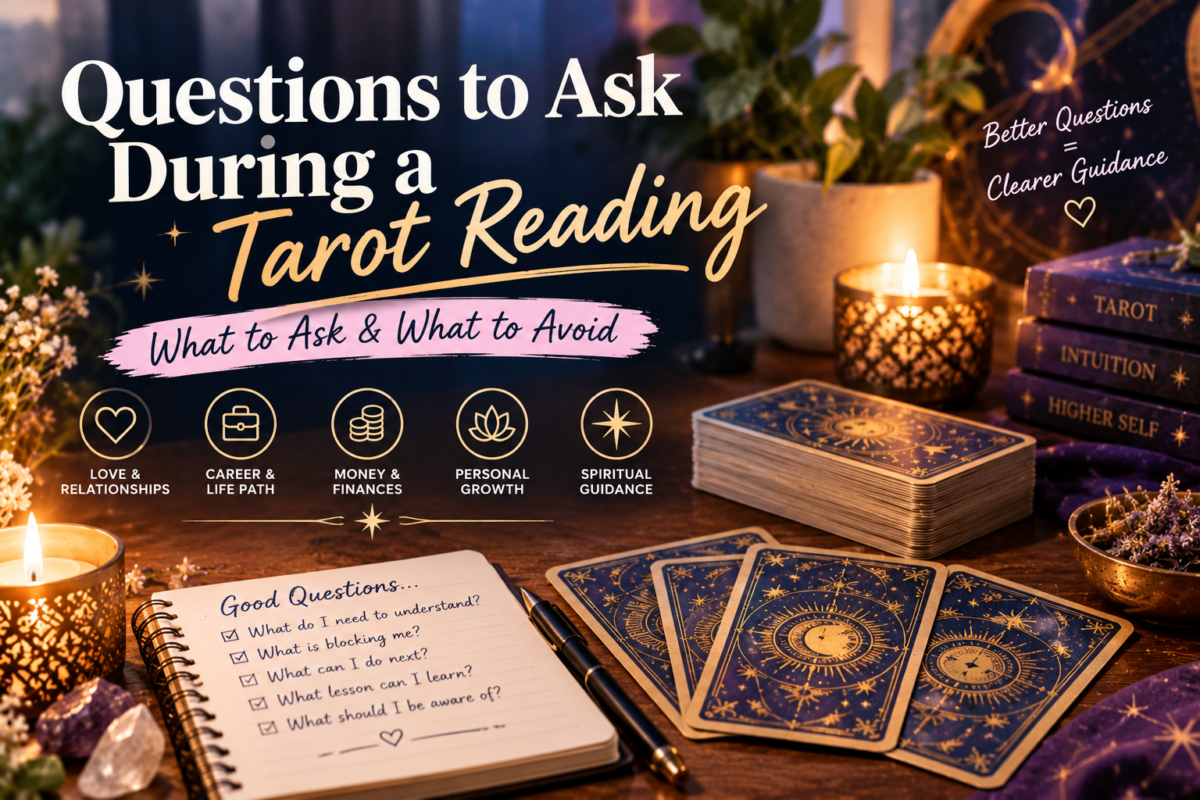
How Tarot Can Help You Explore Abandonment Fear
Tarot cannot prove:
“Your partner will leave.”
It cannot objectively read someone’s private thoughts.
But Tarot can be useful as a self-reflection tool.
Instead of asking:
“Will they abandon me?”
try:
“What fear is being triggered?”
“What am I afraid will happen?”
“What relationship pattern am I repeating?”
“What boundary do I need?”
“What would emotional security look like for me?”
This makes the reading more empowering.
5-Card Tarot Spread for Fear of Abandonment
Card 1 – What fear is being triggered?
Identify the emotional wound.
Card 2 – What is this fear trying to protect me from?
Explore the underlying concern.
Card 3 – What am I assuming without evidence?
Separate fear from facts.
Card 4 – What boundary would support me?
Focus on self-respect.
Card 5 – What would a secure response look like?
Identify the healthier next step.
Tarot Cards for Self-Reflection
The Moon
Questions about uncertainty, fear and incomplete information.
Nine of Swords
Reflection around worry and repetitive thoughts.
Five of Pentacles
Feelings of exclusion, loneliness or emotional insecurity.
Two of Swords
Difficulty facing a decision.
Queen of Swords
Boundaries, honesty and clear thinking.
Strength
Emotional regulation and inner courage.
The Star
Hope, healing and rebuilding trust in yourself.
These interpretations are reflective, not psychological diagnoses or predictions.
Fear of Abandonment and Emotionally Unavailable Partners
This combination can become particularly painful.
You want closeness.
They create distance.
You become anxious.
They withdraw.
You chase.
They pull further away.
Eventually you may start believing:
“If I just become better, they’ll finally choose me.”
But the problem may not be your worth.
It may be the relationship dynamic.
Fear of Abandonment and Repeating Relationship Patterns
Ask yourself:
Does this relationship feel strangely familiar?
Have you repeatedly experienced:
- inconsistent affection?
- emotionally distant partners?
- intense beginnings followed by uncertainty?
- chasing someone who doesn’t fully choose you?
- fear whenever someone becomes distant?
If yes, it may be useful to explore the pattern rather than only analyzing the current person.
A Quick Self-Reflection Checklist
Ask yourself honestly:
| Question | Yes/No |
|---|---|
| Do I frequently fear my partner will leave? | |
| Do delayed replies make me anxious? | |
| Do I need frequent reassurance? | |
| Do I overanalyze small changes? | |
| Do I struggle with being alone? | |
| Do I tolerate poor treatment to avoid losing someone? | |
| Do I sometimes push people away first? | |
| Do I lose myself in relationships? | |
| Do I repeatedly choose emotionally unavailable people? |
A “yes” doesn’t diagnose anything.
It’s simply an invitation to become more aware of your emotional patterns.
FAQ
1. What is fear of abandonment in relationships?
It is a persistent fear that someone you love will leave, reject you or become emotionally disconnected. It can affect how you interpret communication, intimacy and relationship uncertainty.
2. What are the signs of fear of abandonment?
Common signs can include reassurance-seeking, jealousy, overthinking, sensitivity to distance, people-pleasing, difficulty trusting and fear of being alone.
3. Why am I always afraid my partner will leave me?
This fear can be influenced by attachment patterns, previous loss, rejection, difficult relationships or other experiences that made emotional security feel uncertain.
4. Is fear of abandonment the same as anxious attachment?
Not exactly. They can overlap, but anxious attachment is a broader attachment pattern, while fear of abandonment describes a specific fear of being left or rejected.
5. Can fear of abandonment ruin a relationship?
It can create relationship difficulties if it leads to constant reassurance-seeking, testing, jealousy, controlling behavior or withdrawal. However, awareness and healthier coping strategies can help interrupt these patterns.
6. How do I stop worrying that my partner will leave?
Start by separating facts from assumptions, learning your triggers, communicating directly, building self-trust and maintaining a life outside the relationship.
7. Can Tarot tell me if my partner will leave?
Tarot should not be treated as reliable proof of another person’s future actions or private intentions. It can instead be used to reflect on your emotions, fears, boundaries and choices.
8. Can fear of abandonment be healed?
People can learn healthier ways to manage abandonment fears and develop more secure relationship patterns. Professional support can also be helpful when these fears are intense or significantly affect daily life and relationships.
Final Thoughts
Fear of abandonment can make love feel like something you constantly have to protect.
You watch.
You analyze.
You seek reassurance.
You prepare for the worst.
But healing doesn’t mean convincing yourself:
“They will never leave.”
Nobody can promise that.
Healing is learning:
“Whatever happens, I can trust myself to handle it.”
You can love someone without constantly monitoring them.
You can give someone space without assuming rejection.
You can ask for reassurance without making it the foundation of your security.
And you can recognize when your fear is speaking without allowing it to make every decision for you.
Sometimes the most important question isn’t:
“How do I make sure they never leave?”
It’s:
“How do I stop leaving myself every time I’m afraid someone else might?”
That is where real emotional security begins.


2 thoughts on “Fear of Abandonment in Relationships: 9 Signs & How to Heal”