

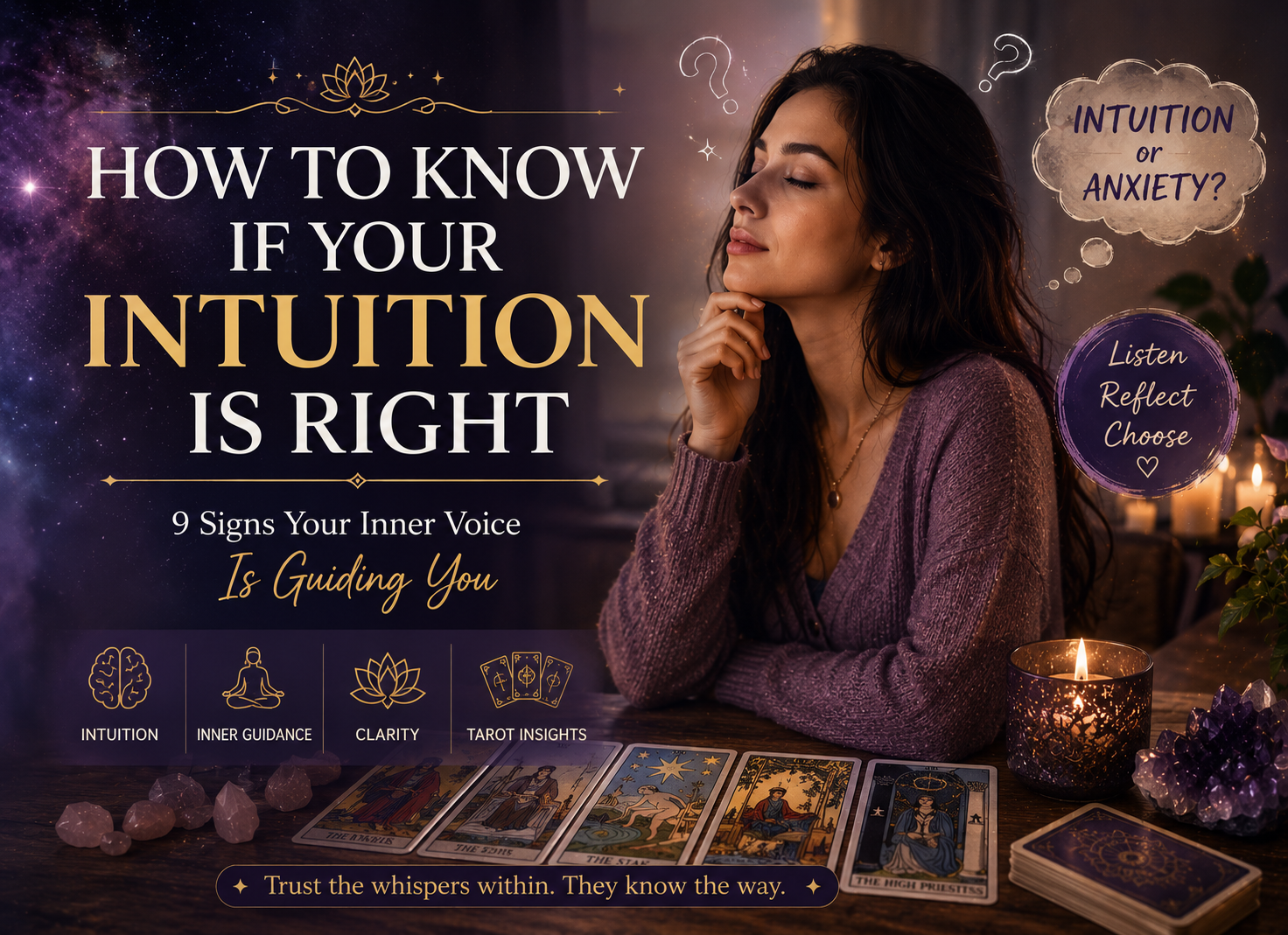
Have you ever had a feeling that something was right—or wrong—before you had any logical explanation?
Maybe you met someone and immediately felt comfortable around them.
Or perhaps everything looked perfect on paper, but something inside you said, “Something isn’t right.”
Sometimes that feeling is called a gut feeling.
Sometimes people describe it as intuition.
And sometimes it can be difficult to tell whether you’re experiencing genuine intuition or simply anxiety, fear or overthinking.
So, how do you know if your intuition is right?
The answer isn’t about blindly trusting every feeling.
Instead, it’s about learning to recognize the difference between a calm inner signal and an emotionally driven reaction.
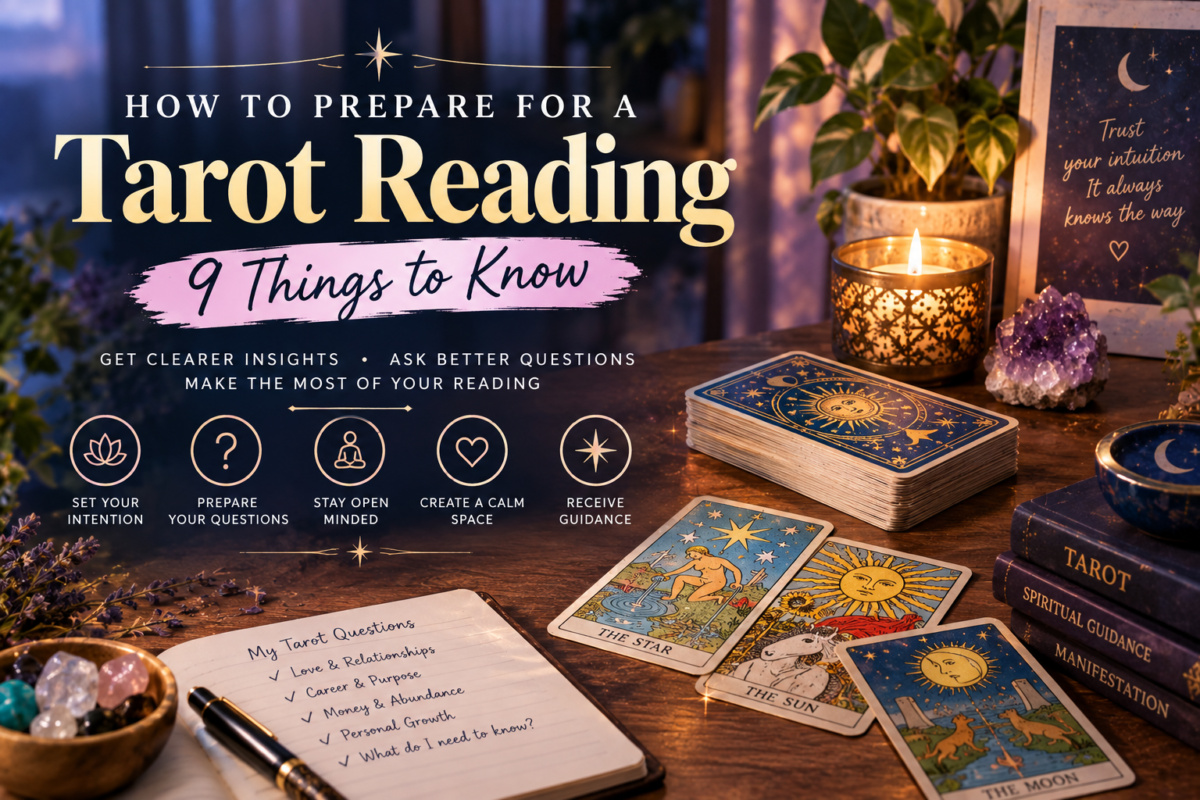
Tarot can also become a useful tool for this process because it can encourage you to slow down, reflect and explore what you may already sense beneath the surface.
What Is Intuition?
Intuition is often described as an immediate sense of knowing without consciously reasoning through every detail.
You might experience it as:
- a quiet feeling
- a sudden realization
- a sense of clarity
- a physical reaction
- a strong inner yes or no
- an unexplained feeling about a person or situation
However, intuition isn’t the same as always being correct.
Your emotions, previous experiences and fears can influence your perceptions too.
That’s why learning how to know if your intuition is right requires self-awareness rather than simply following every strong feeling.
Intuition vs Anxiety: Why It Can Be So Confusing
This is where many people struggle.
Anxiety can also feel extremely convincing.
You might think:
“I have a feeling something bad is going to happen.”
But is that intuition?
Or are you imagining possible negative outcomes?
A useful distinction is the quality of the feeling.
| Intuition | Anxiety |
|---|---|
| Often feels quiet | Often feels urgent |
| Can feel clear | Usually creates confusion |
| Doesn’t require constant analysis | Encourages overthinking |
| Gives you a sense of awareness | Creates fear |
| Can remain steady | Changes with your thoughts |
| Doesn’t usually demand immediate action | Often creates “I must act now” feelings |
| Feels like information | Feels like a threat |
| Allows you to pause | Makes you want certainty |
This isn’t a medical test or absolute rule.
Sometimes intuition can feel uncomfortable.
And anxiety can occasionally point toward something worth examining.
The goal is not to label every uncomfortable feeling as anxiety.
The goal is to slow down enough to understand what you’re actually experiencing.
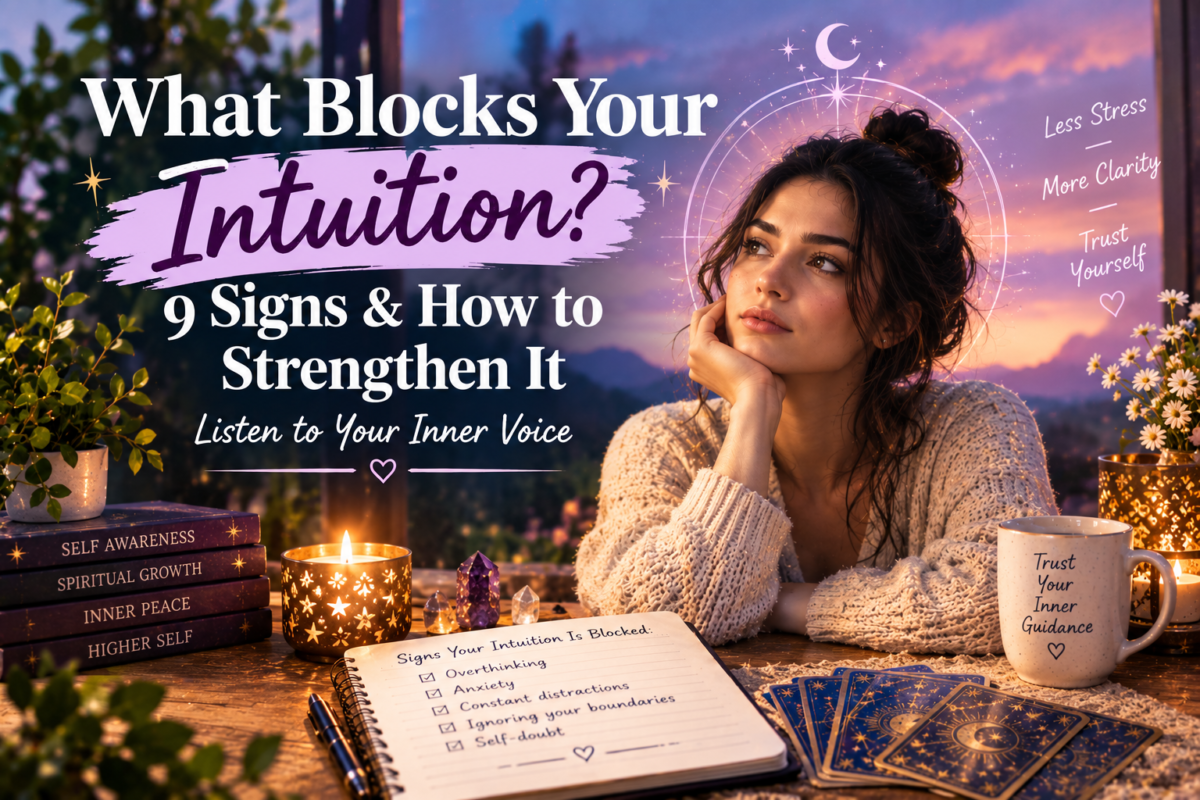
9 Signs Your Intuition May Be Guiding You
1. The Feeling Is Quiet but Persistent
One of the most common descriptions of intuition is that it doesn’t need to shout.
You may continue going about your day, yet something quietly remains in the back of your mind.
For example:
“I don’t know why, but I don’t think this is right for me.”
You may not have all the answers.
But the feeling remains.
Anxiety, on the other hand, may repeatedly demand your attention with endless questions.
2. You Feel Clearer When You Stop Overthinking
Try this simple experiment.
Ask yourself the question.
Then stop analyzing it for a moment.
Take a few slow breaths.
Instead of asking:
“What should I do?”
ask:
“What do I already know?”
Sometimes your first response is surprisingly simple.
This is particularly useful when making relationship decisions.
3. Your Body Reacts Before Your Mind Understands Why
Intuition isn’t always experienced as a thought.
Sometimes you notice your body first.
You may experience:
- tension
- relaxation
- heaviness
- lightness
- a feeling of openness
- a desire to step back
However, physical sensations can also be caused by stress or anxiety.
So don’t treat one physical reaction as proof that something is spiritually true.
Instead ask:
“What was happening immediately before I felt this?”
Context matters.
4. The Feeling Doesn’t Need Constant Confirmation
Anxiety often asks:
“Are you sure?”
Then:
“But what if?”
Then:
“Maybe you misunderstood.”
Then:
“Should you ask someone else?”
Then:
“What if something goes wrong?”
You can spend hours trying to obtain certainty.
Intuition may be much simpler.
You might simply think:
“This isn’t for me.”
or:
“I should give this a chance.”
The feeling may remain even without constant mental debate.
5. Your Intuition Aligns With What You Already Observe
A strong inner feeling shouldn’t automatically override reality.
Instead, consider whether your intuition is supported by what you’re actually noticing.
For example, someone may tell you they care about you.
But their actions repeatedly show inconsistency.
Your intuition may be telling you:
“Pay attention.”
In this situation, you aren’t required to choose between intuition and evidence.
You can use both.
6. You Feel More Like Yourself When You Listen to It
Think about the decision you’re considering.
When you imagine saying yes, do you feel:
- more peaceful?
- more authentic?
- more aligned with your values?
When you imagine saying no, do you feel:
- relief?
- disappointment?
- fear?
- freedom?
Your emotional response can provide information.
It doesn’t necessarily provide the final answer.
But it can tell you where to investigate further.
7. Your Intuition Becomes Stronger When You Are Calm
Imagine trying to hear a whisper in a crowded room.
It’s difficult.
Your mind can work the same way.
Constant:
- social media
- opinions
- messages
- relationship analysis
- fear
- comparison
- overthinking
can make it harder to notice subtle internal signals.
That’s why practices such as:
- journaling
- meditation
- quiet walks
- Tarot reflection
- mindfulness
can help create space for self-observation.
8. You Don’t Need to Force the Answer
Sometimes the strongest intuitive decision is:
“I don’t know yet.”
That’s okay.
You don’t have to make every decision immediately.
Give yourself permission to wait.
If something is genuinely important, gathering more information may help.
Intuition isn’t about avoiding facts.
It’s about combining your inner awareness with reality.
9. Looking Back, the Feeling Makes More Sense
Have you ever looked back at a situation and thought:
“I knew something wasn’t right.”
Perhaps you noticed small details but ignored them.
This can teach you something important about your own intuitive patterns.
Start keeping an intuition journal.
Write down:
What did I feel?
What was happening?
What did I think the feeling meant?
What happened afterward?
Over time, you may learn which sensations tend to be accurate signals for you—and which ones are usually connected to fear or overthinking.
How Tarot Can Help You Understand Your Intuition
Tarot doesn’t need to be used as a tool that gives you a fixed future.
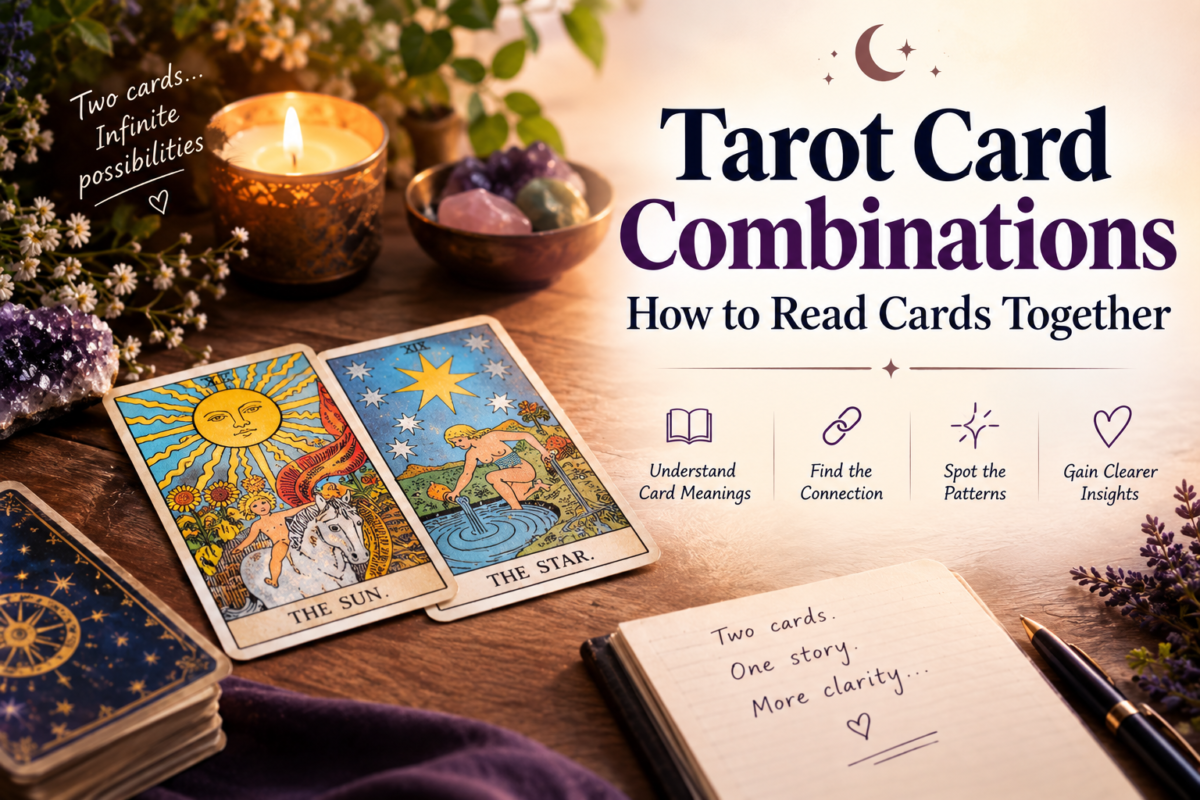
Instead, you can use the cards as a reflection system.
When you pull a card, ask yourself:
“What does this card make me notice?”
Your immediate reaction may reveal something.
For example, you pull a card and immediately think:
“I knew this was the issue.”
That reaction itself can become something to explore.
The Tarot card isn’t necessarily proving that your intuition is correct.
It may simply be helping you focus your attention.
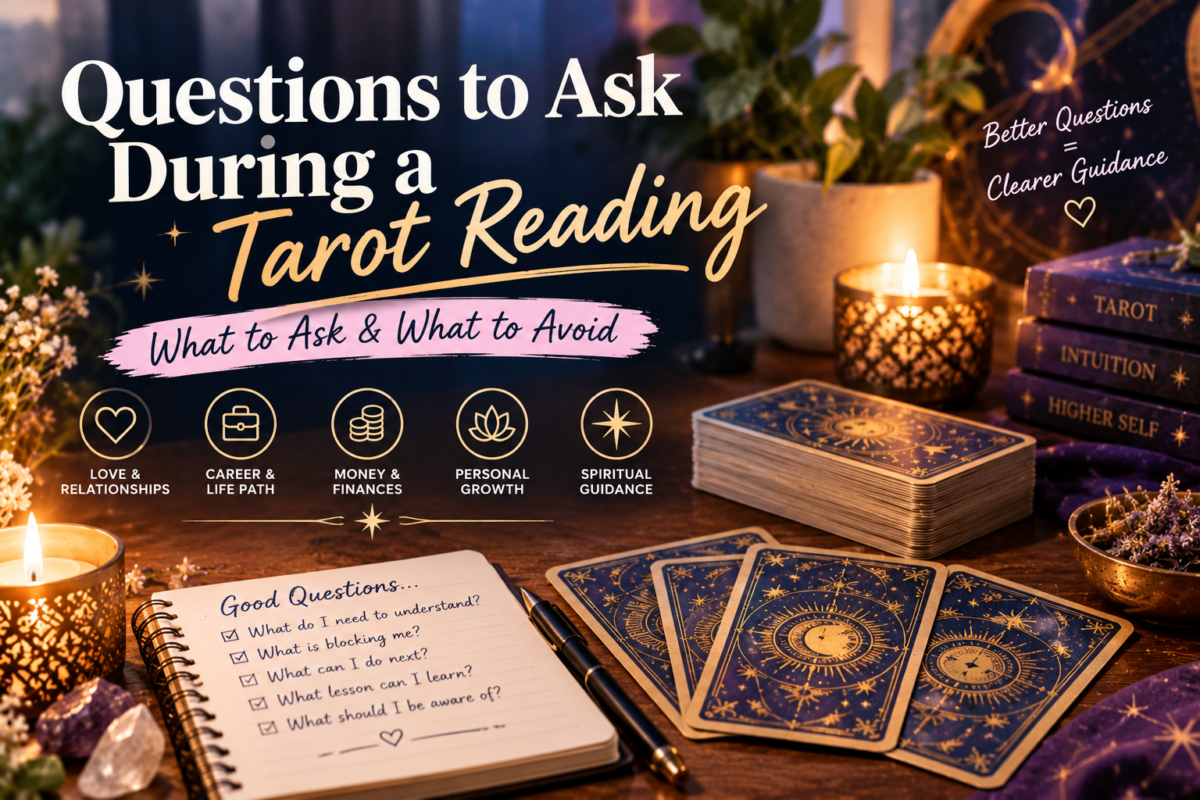
5 Tarot Questions to Strengthen Your Intuition
Instead of repeatedly asking:
“Will this happen?”
try asking:
1. What am I already sensing about this situation?
2. What am I refusing to acknowledge?
3. What fear could be influencing my judgment?
4. What information am I overlooking?
5. What would help me make a grounded decision?
These questions encourage self-awareness rather than dependency on repeated readings.
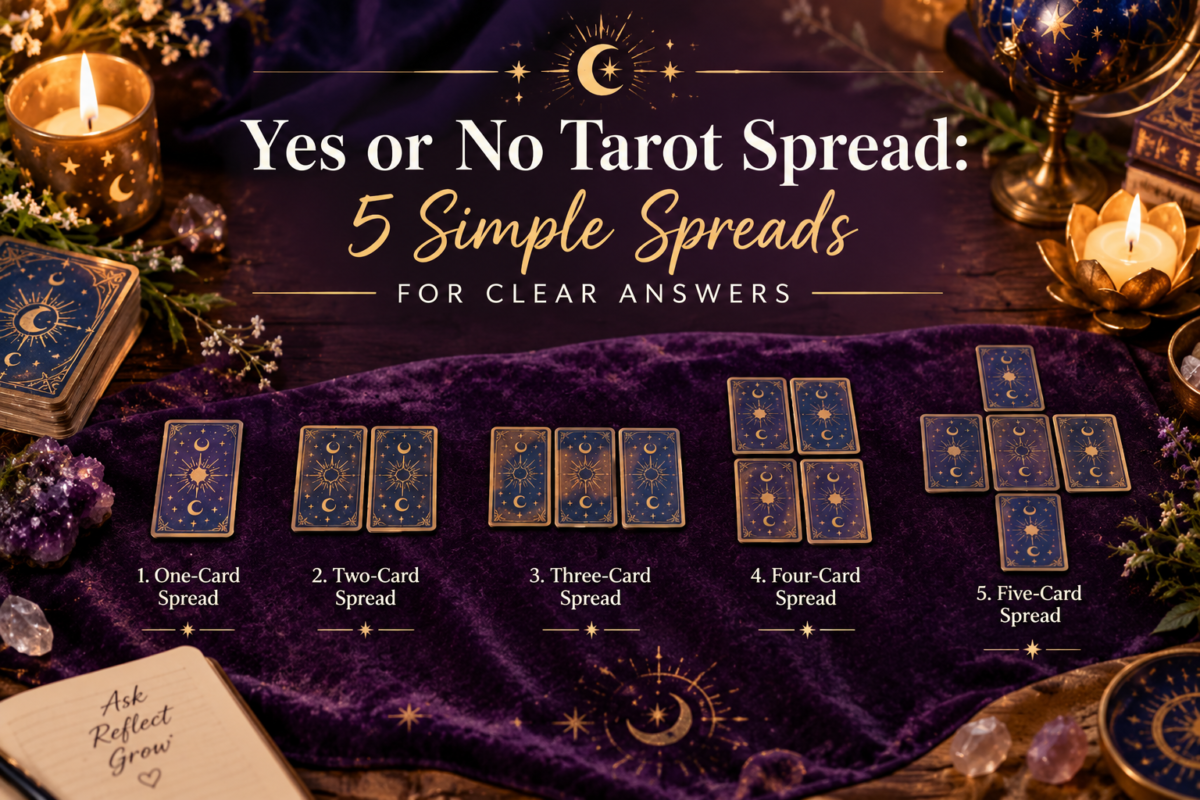
A Simple 5-Card Intuition Tarot Spread
Try this spread when you’re confused about a decision.
| Position | Question |
|---|---|
| Card 1 | What am I currently sensing? |
| Card 2 | What fear is influencing me? |
| Card 3 | What reality should I pay attention to? |
| Card 4 | What am I not seeing clearly? |
| Card 5 | What guidance can help me move forward? |
The goal isn’t to force a yes or no answer.
Instead, look for patterns and themes.
Intuition in Relationships
Relationship intuition can be especially complicated.
You might sense:
“Something has changed.”
But then your mind starts analyzing every message.
Why did they take two hours to reply?
Why did they use that emoji?
Why did they suddenly become distant?
Are they losing interest?
This is where intuition and anxiety can become difficult to separate.
Rather than interpreting every small behavior, step back.
Ask:
Is this a one-time event?
or
Is this a repeated pattern?
Patterns are usually more useful than isolated moments.
Intuition vs Relationship Anxiety
Consider this example.
Your partner doesn’t reply for three hours.
Anxiety might say:
“They don’t care about me anymore.”
“They’re probably talking to someone else.”
“I knew this relationship would fail.”
A grounded intuitive response might be:
“Something feels different. I’ll pay attention, but I don’t need to create a story before I have more information.”
That difference is powerful.
Awareness doesn’t require panic.
What If Your Intuition Tells You to Leave?
Sometimes your inner voice may repeatedly tell you that a situation isn’t healthy for you.
Don’t use Tarot—or any spiritual practice—to convince yourself to stay somewhere that repeatedly harms you.
Instead, examine the real-world evidence.
Ask:
- Are my boundaries respected?
- Do I feel emotionally safe?
- Are promises followed by consistent action?
- Can I communicate openly?
- Am I becoming more confident or less confident?
- Am I staying because I want to—or because I’m afraid?
Your wellbeing should remain the priority.
The High Priestess and Intuition
One of the Tarot cards most strongly associated with intuition is The High Priestess.
Her symbolism is often connected with:
- inner knowing
- mystery
- silence
- hidden information
- intuition
- reflection
- spiritual awareness
If The High Priestess appears during a reading, you might ask:
“What happens if I stop looking outside myself for the answer?”
This connects naturally with your existing article:
The High Priestess Tarot Meaning: Love, Career, Yes/No & Advice
How to Strengthen Your Intuition Every Day
You don’t need an elaborate spiritual routine.
Try these simple practices.
Morning
Before checking your phone, ask:
“What do I need to pay attention to today?”
Write the first thought that comes to mind.
During the Day
When you experience a strong feeling, don’t immediately act.
Pause.
Ask:
“What triggered this feeling?”
Evening
Write down one situation where you trusted yourself.
Then write down one situation where fear influenced you.
Over time, you’ll begin recognizing your patterns.
7 Mistakes That Can Make Intuition Harder to Trust
1. Asking Too Many People for Opinions
Sometimes ten opinions create more confusion than one quiet moment alone.
2. Repeating the Same Tarot Question
Pulling cards repeatedly until you get the answer you want can make readings more confusing.
3. Treating Every Fear as Intuition
Fear can feel extremely convincing.
4. Ignoring Real-World Evidence
Intuition shouldn’t replace facts.
5. Making Immediate Decisions
You can pause before acting.
6. Looking for Absolute Certainty
Most important decisions don’t come with 100% certainty.
7. Ignoring Your Own History
Your past experiences can help you recognize patterns—but they can also create fears.
Understanding both is part of becoming more self-aware.
Intuition, Tarot and Spiritual Growth
The deeper purpose of intuition isn’t simply predicting what will happen.
It’s learning to trust yourself.
You may eventually move from:
“What will happen?”
to:
“How do I want to respond?”
That is a significant shift.
Tarot can support this process by encouraging reflection, while intuition can help you become more aware of your internal responses.
Together, they can become tools for self-awareness rather than dependency.
Frequently Asked Questions
1. How do I know if my intuition is right?
Look for a feeling that remains relatively consistent when you are calm, then compare it with observable facts and patterns. Intuition isn’t guaranteed to be correct, so use it alongside evidence.
2. What does a true intuitive feeling feel like?
There isn’t one universal sensation. Some people experience intuition as a quiet sense of knowing, while others notice physical sensations or sudden clarity.
3. How can I tell intuition from anxiety?
Anxiety often creates urgency, repeated questioning and fear-based scenarios. Intuition may feel quieter and more stable. However, the two can overlap, so context and self-awareness are important.
4. Can Tarot improve intuition?
Tarot can be used as a reflective practice that encourages you to slow down, notice your reactions and explore your thoughts. It shouldn’t be treated as proof that an intuitive feeling is objectively correct.
5. Which Tarot card represents intuition?
The High Priestess is one of the Tarot cards most commonly associated with intuition, inner knowledge, silence and deeper awareness.
6. Should I trust my gut feeling about someone?
Take the feeling seriously enough to investigate it, but don’t automatically treat it as fact. Observe the person’s consistent behavior, communication and actions.
7. Can intuition predict the future?
Intuition shouldn’t be treated as a guaranteed prediction system. It can help you notice patterns and possibilities, but future events remain uncertain.
8. Why do I second-guess my intuition?
Past experiences, anxiety, lack of confidence, external opinions and a desire for certainty can all make you question your initial perceptions.
9. Can intuition be wrong?
Yes. Intuition is not infallible. That’s why combining inner awareness with evidence, reflection and thoughtful decision-making is important.
Intuition vs Anxiety: Quick Checklist
| Ask Yourself | If YES |
|---|---|
| Does the feeling remain when I’m calm? | Explore it |
| Am I noticing a repeated pattern? | Pay attention |
| Do the facts support my concern? | Investigate |
| Am I constantly seeking reassurance? | Pause |
| Am I imagining many worst-case scenarios? | Check for anxiety |
| Do I feel pressured to act immediately? | Slow down |
| Can I wait for more information? | Give yourself time |
| Am I ignoring obvious red flags? | Reassess |
| Am I using Tarot repeatedly for certainty? | Take a break |
Final Thoughts
Your intuition doesn’t have to compete with logic.
You don’t have to choose between:
“I trust my gut.”
and
“I look at the facts.”
You can do both.
The healthiest form of intuition isn’t about becoming certain about everything.
It’s about becoming more aware of yourself.
When you learn to pause before reacting, recognize your emotional patterns and observe reality without immediately creating a story, your inner voice can become easier to understand.
And perhaps the most important question isn’t:
“Is my intuition always right?”
It’s:
“Can I trust myself enough to listen, investigate and make a conscious choice?”
That is where intuition becomes a powerful part of personal and spiritual growth.