

Have you ever looked at a Tarot card and suddenly felt that it meant something completely different from the definition you memorised?
Maybe you noticed one tiny detail in the artwork.
Maybe a particular word came into your mind.
Or perhaps you simply had a feeling about the card before you could explain why.
That is where intuition and Tarot can work together.
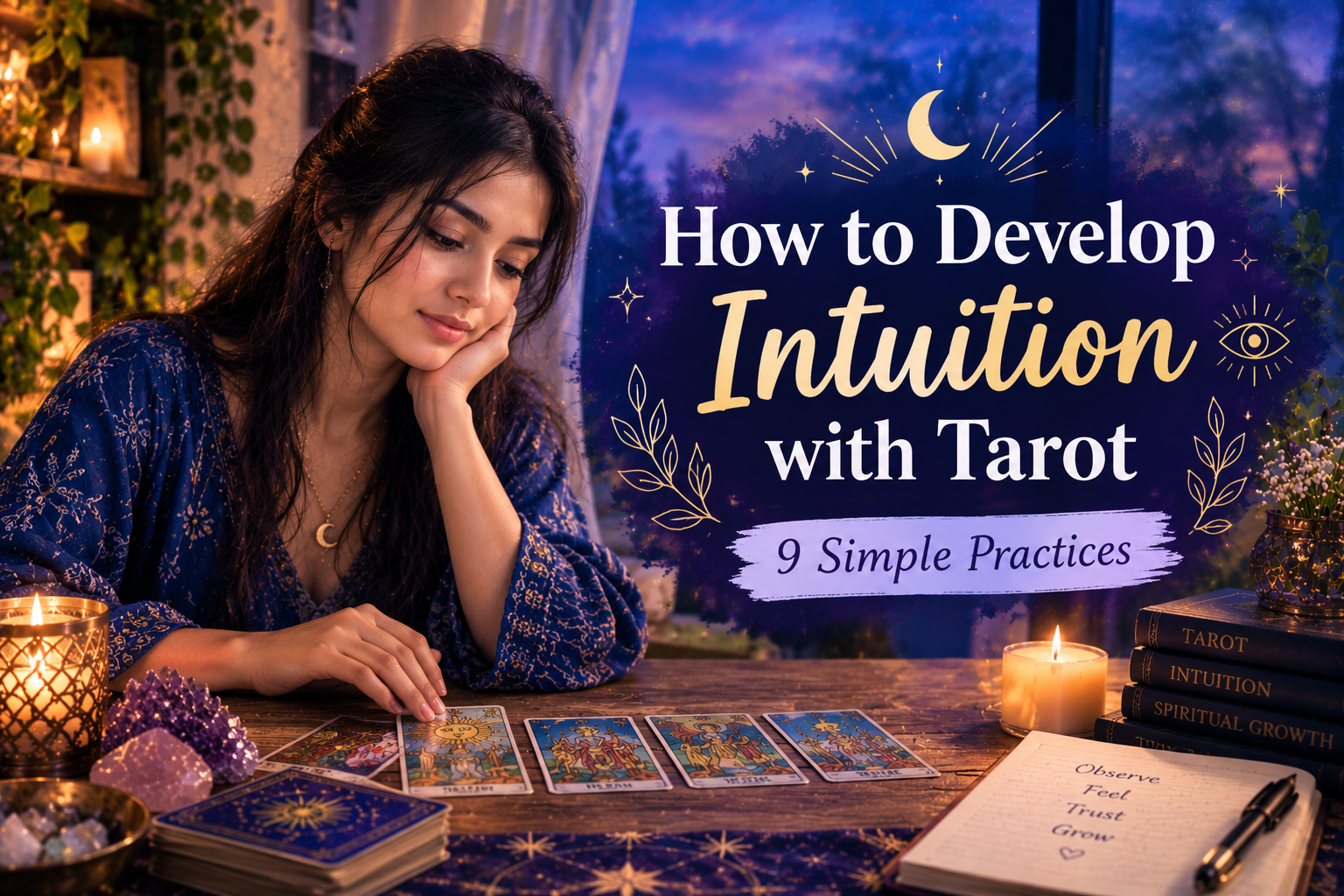
Learning Tarot isn’t only about memorising 78 card meanings. As you become more familiar with the cards, you can also learn to notice your first impressions, emotional responses, symbols and connections between cards.
In fact, intuition is often described as a form of rapid recognition: your mind can connect information, memories and previous experience before you consciously explain every step.
But developing Tarot intuition doesn’t mean blindly trusting every feeling.
The goal is to become better at noticing your inner response while still checking it against the card, the question and the real situation.
Here are nine practical ways to develop intuition with Tarot.
What Is Tarot Intuition?
Tarot intuition is your ability to notice an immediate impression, feeling, image, idea or association when you look at a card.
For example, you pull the Eight of Cups.
You already know its traditional association with leaving something behind.
But instead of stopping there, you notice:
- The figure’s posture.
- The dark sky.
- The distance between the figure and the cups.
- Your emotional reaction.
- A particular cup that catches your attention.
- A thought about something you’re currently avoiding.
That additional layer is where intuitive Tarot reading can begin.
Intuition shouldn’t replace knowledge.
Think of Tarot knowledge as your foundation and intuition as another layer of interpretation.
9 Ways to Develop Intuition with Tarot
1. Pull One Card Every Day
You don’t need a complicated Tarot spread to practise intuition.
Start with one card.
Each morning, ask:
“What energy or theme should I pay attention to today?”
Pull one card.
Before looking at a guidebook, write down:
- Your first impression.
- One emotion.
- One symbol you notice.
- One word that comes to mind.
- What the image reminds you of.
Only afterwards compare your interpretation with the traditional meaning.
This creates an important habit:
Notice first. Research second.
2. Look at the Image Before Reading the Meaning
This is one of the easiest ways to strengthen intuitive Tarot reading.
Take a card you’ve never studied closely.
Look at it for 30–60 seconds.
Don’t search for the meaning.
Instead ask:
What do I notice first?
Then:
How does this image make me feel?
Then:
What story seems to be happening here?
Finally:
What could this card be trying to show me?
The purpose isn’t to guess the “correct” definition.
You’re training yourself to observe before automatically reaching for a memorised keyword.
3. Keep a Tarot Intuition Journal
A Tarot journal can help you recognise your own patterns over time.
Create five simple columns:
| Card | First impression | Traditional meaning | What happened | What I learned |
|---|---|---|---|---|
| The Moon | Something feels unclear | Uncertainty, illusion | Needed more information | Don’t rush |
| Six of Cups | Familiarity | Memories, nostalgia | Heard from an old friend | Past resurfaced |
| Strength | Quiet confidence | Courage, patience | Handled conflict calmly | Softness can be powerful |
This gives you something extremely valuable:
your own personal Tarot dictionary.
Over time, you may notice that certain cards communicate particular ideas to you based on your experiences.
4. Practice With Cards You Don’t Know Well
When you’re learning Tarot, it’s tempting to practise only with cards you already understand.
Try the opposite.
Choose an unfamiliar card.
Study the image.
Ask yourself:
“If I had never read the meaning of this card, what would I think it represents?”
Write your answer.
Then compare it with the traditional interpretation.
You may discover that your first impression wasn’t completely different from the established meaning.
And when it is different, that’s useful too.
It teaches you to distinguish between:
personal association and traditional Tarot symbolism.
5. Use the “First Thought” Exercise
Shuffle your cards.
Ask a simple question.
For example:
“What do I need to understand about this situation?”
Pull one card.
Immediately write the first thought that appears.
Don’t edit it.
Don’t make it sound intelligent.
Don’t try to produce the perfect Tarot interpretation.
Your first response might be:
“This feels like I’m waiting.”
Or:
“This person isn’t telling me everything.”
Or:
“I need to stop forcing this.”
Then look at the card.
What visual details support that impression?
This exercise helps you become aware of your initial reactions without automatically treating them as absolute truth.
6. Learn to Read the Whole Card, Not Just Keywords
A common beginner habit is:
Card = keyword.
For example:
Three of Swords = heartbreak.
But Tarot becomes more interesting when you ask:
What is happening in this particular image?
Look at:
- People.
- Body language.
- Colours.
- Weather.
- Objects.
- Direction.
- Background.
- Facial expressions.
- Number symbolism.
- Relationship between the figures.
You can then combine observation with traditional meaning.
This makes your readings more flexible and personal.
7. Practise With Open-Ended Questions
Some questions leave more room for reflection than simple yes/no questions.
Instead of:
“Will he come back?”
Try:
“What do I need to understand about this connection?”
Instead of:
“Does she love me?”
Try:
“What is important for me to understand about this relationship?”
Instead of:
“Will I get the job?”
Try:
“What should I focus on as I pursue this opportunity?”
Open-ended questions can encourage you to explore the situation rather than trying to force a Tarot card into a predetermined answer.
For more relationship-focused questions, you can also explore our guide to Tarot for Relationship Clarity.
8. Don’t Immediately Pull More Cards
This is one of the biggest mistakes beginners make.
You pull:
The Moon.
You don’t like the answer.
So you pull another card.
Then another.
Then another.
Soon you have seven cards and five different interpretations.
Instead, pause.
Ask:
“What did I feel when I first saw The Moon?”
Maybe the answer was uncertainty.
Maybe fear.
Maybe curiosity.
Maybe something completely different.
Sit with that first impression before pulling another card.
Sometimes intuition becomes clearer when you stop asking for more information.
9. Check Your Intuition Against Reality
This is perhaps the most important practice.
Intuition doesn’t mean:
“Whatever I feel must be true.”
Your feelings can also be influenced by:
- Fear.
- Hope.
- Previous experiences.
- Expectations.
- Attachment.
- Confirmation bias.
- Current emotions.
So when you receive an intuitive impression, ask:
What am I noticing?
What evidence supports it?
What evidence contradicts it?
Could another interpretation make sense?
Am I seeing what I want to see?
This approach keeps Tarot grounded.
A Tarot reading can help you reflect, but it should not replace direct communication, observable behaviour or practical decision-making.
Intuition vs Memorised Tarot Meanings
You don’t have to choose one or the other.
The strongest approach is often a combination.
| Traditional Tarot Knowledge | Intuitive Reading |
|---|---|
| Gives you a foundation | Adds personal insight |
| Uses established symbolism | Notices immediate impressions |
| Helps maintain consistency | Allows flexibility |
| Can be learned through study | Develops through practice |
| Gives context | Adds emotional and visual depth |
Think of it this way:
Knowledge tells you what a card can represent.
Intuition helps you notice what may be relevant right now.
How to Know If Your Tarot Intuition Is Improving
You may notice progress when:
You notice details faster
You naturally pay attention to symbols and imagery.
You don’t panic when you see an unfamiliar card
You become curious rather than immediately reaching for a guidebook.
Your interpretations become more specific
Instead of saying:
“The card means change.”
You might notice:
“This looks like a change that requires leaving an old pattern behind.”
You become comfortable with multiple meanings
You understand that one card can communicate different things depending on context.
You stop needing constant confirmation
You can form an interpretation and then verify it thoughtfully.
Your readings become more connected
Instead of interpreting every card separately, you start seeing how the cards interact.
5-Minute Tarot Intuition Exercise
If you want a quick daily practice, try this.
Step 1: Shuffle
Take three slow breaths.
Step 2: Pull one card
Don’t search for its meaning.
Step 3: Observe
Write down three things you notice.
Step 4: Feel
Write down one emotion the card creates.
Step 5: Associate
Write the first memory, person, situation or idea that comes to mind.
Step 6: Interpret
Create one sentence:
“This card may be asking me to…”
Step 7: Check
Now compare your interpretation with the traditional meaning.
This entire exercise can take less than five minutes.
How to Use Intuition During a Tarot Reading
When you’re doing a full reading, try this sequence:
1. Understand the question
What is the person actually asking?
2. Look at the card
Notice the visual story.
3. Notice your first reaction
What immediately comes to mind?
4. Consider traditional symbolism
What does the card traditionally represent?
5. Look at neighbouring cards
Do they change or reinforce the meaning?
6. Consider the real-life context
What information is actually available?
7. Form your interpretation
Combine observation, knowledge and intuition.
This gives you a much more balanced reading.
Tarot Cards Commonly Associated With Intuition
Certain cards naturally lend themselves to conversations about intuition.
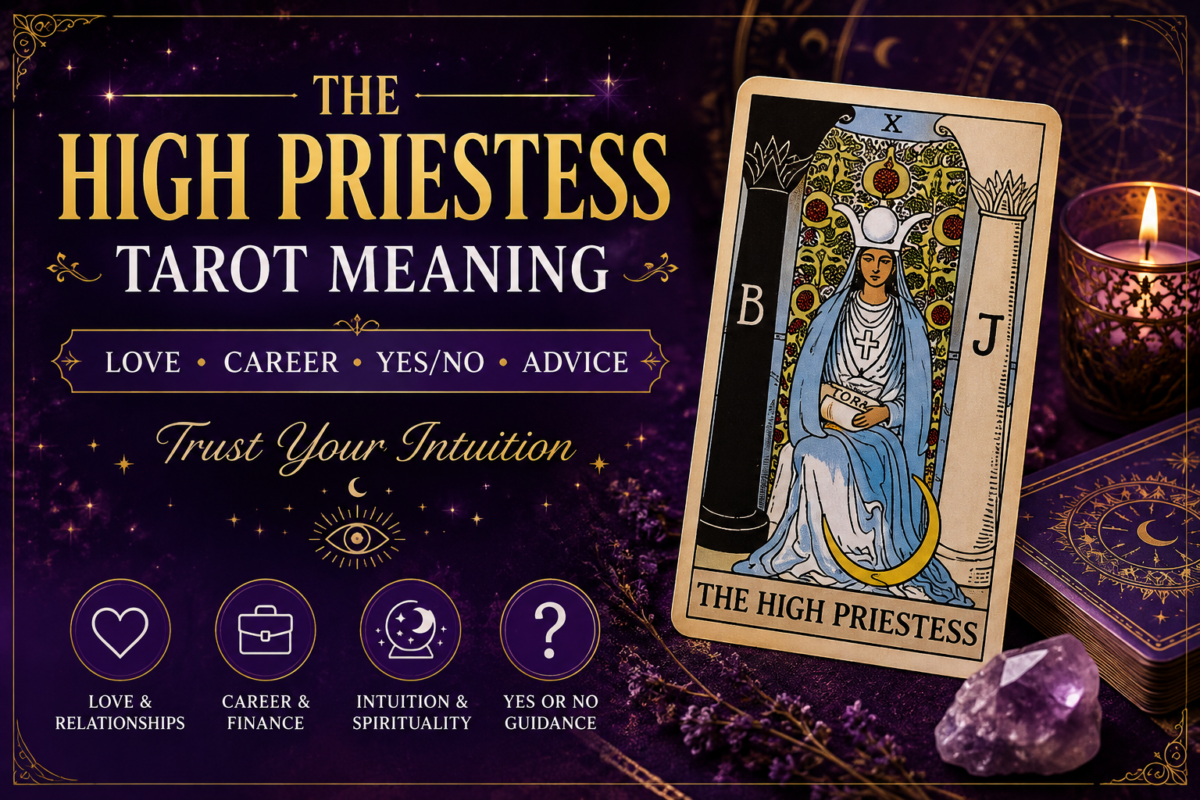
The High Priestess
Often associated with inner knowing, mystery, silence and information beneath the surface.
When she appears, consider:
What do I already know but keep talking myself out of?
The Moon
The Moon can represent uncertainty, subconscious material, dreams and things that aren’t fully clear.
Its appearance can be a reminder to distinguish intuition from fear or assumption.
The Hermit
The Hermit encourages stepping away from external noise and looking inward.
Ask:
What becomes clearer when I stop asking everyone else for an answer?
Queen of Cups
This card can invite emotional awareness, empathy and sensitivity.
Ask:
What am I feeling beneath my immediate reaction?
Judgement
Judgement can encourage reflection, awareness and recognising what you’ve learned from previous experiences.
Ask:
What truth am I ready to acknowledge?
A 7-Card Tarot Spread to Develop Intuition
Try this spread when you want to practise intuitive reading.
Card 1 – What am I noticing?
Your immediate observation.
Card 2 – What am I feeling?
Your emotional response.
Card 3 – What am I overlooking?
Something you may not have considered.
Card 4 – What does my intuition notice?
Your intuitive impression.
Card 5 – What does traditional Tarot suggest?
The established card symbolism.
Card 6 – What needs verification?
Separate intuition from assumption.
Card 7 – What should I reflect on?
The bigger lesson.
This spread is intentionally designed to make you pause and interpret, rather than simply searching for a prediction.
What If Your Intuition and the Tarot Card Meaning Don’t Match?
That’s completely normal.
Suppose you pull a card traditionally associated with opportunity, but your immediate feeling is caution.
Don’t immediately assume either one is wrong.
Ask:
“Why does this card feel cautious to me?”
Perhaps the imagery reminds you of something.
Perhaps the question itself carries emotional weight.
Perhaps your personal experience with this card has developed a different association.
Write both interpretations down.
Then look at the surrounding cards and real-world circumstances.
The goal isn’t to force your intuition to agree with a guidebook.
It’s to understand why you are responding to the card in that particular way.
Can Tarot Improve Your Intuition?
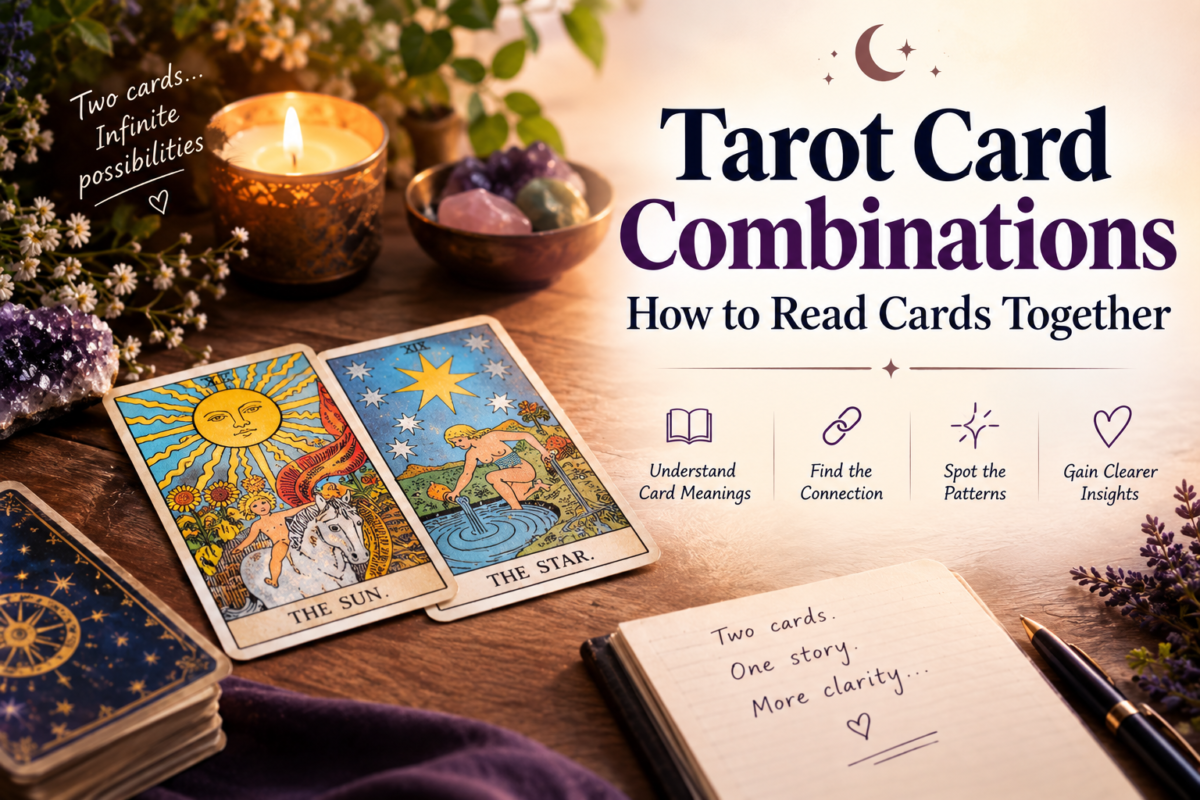
Tarot can provide a structured way to practise observation, reflection and pattern recognition.
Every reading gives you an opportunity to ask:
- What did I notice?
- What did I feel?
- What did I assume?
- What information did I already know?
- What interpretation did I initially overlook?
- What happened afterward?
Over time, this kind of journaling can help you become more aware of your own thinking and intuitive responses.
But don’t treat Tarot as a supernatural accuracy test.
The goal isn’t to prove that every first impression is correct.
The goal is to become more observant, reflective and comfortable with uncertainty.
Tarot Intuition for Relationship Questions
Relationships can make intuition especially difficult because emotions are powerful.
You may feel:
“Something is wrong.”
But that feeling could come from:
- Something you genuinely observed.
- A previous betrayal.
- Fear of abandonment.
- Overthinking.
- A communication problem.
- A real change in someone’s behaviour.
That’s why relationship Tarot should be used carefully.
Instead of asking:
“Is my partner cheating?”
Try:
“What am I noticing in this relationship?”
“What evidence am I responding to?”
“What fear might be influencing my interpretation?”
“What conversation needs to happen?”
Tarot can support reflection, but it cannot verify another person’s private behaviour.
How This Connects With Intuition and Anxiety
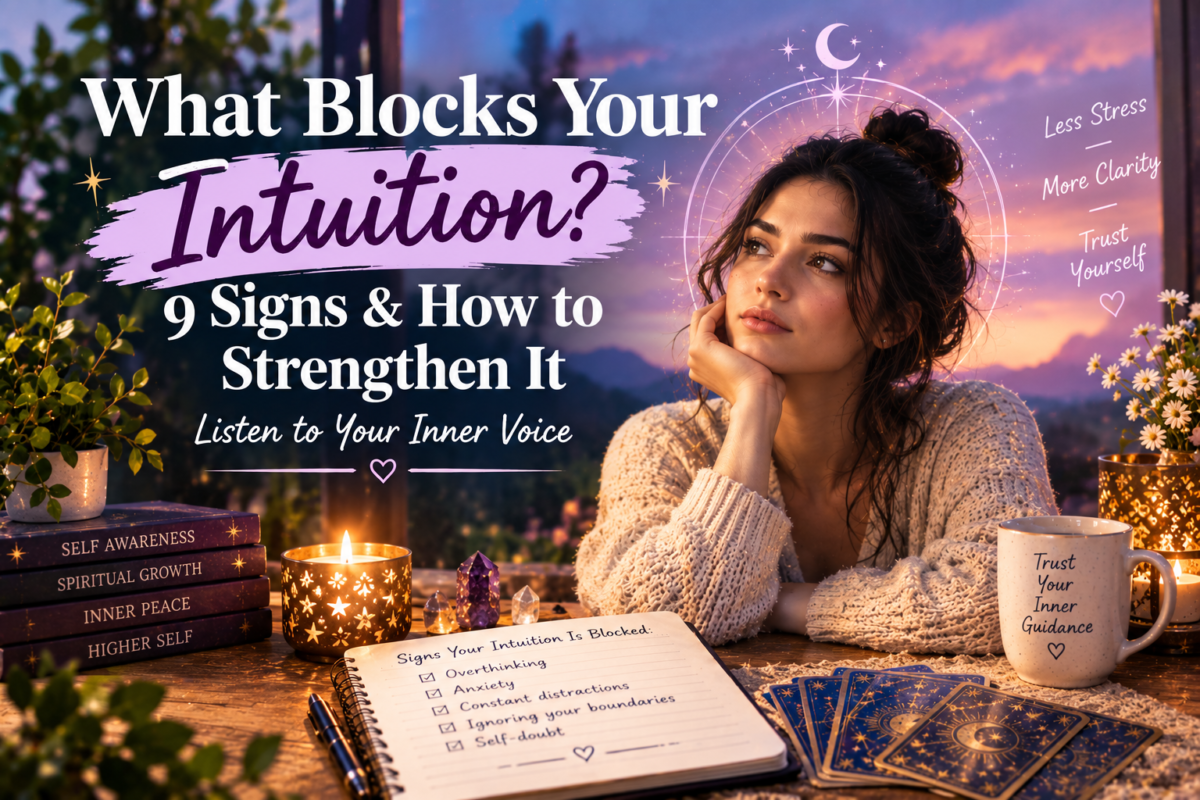
If you’re unsure whether you’re experiencing intuition or anxiety, don’t immediately label every uncomfortable feeling as intuitive.
Astro Palace already explores this distinction in Intuition or Anxiety? 7 Ways to Tell the Difference.
You can also read How to Know If Your Intuition Is Right for a deeper exploration of recognising your inner signals.
The important idea is:
Pause → observe → question → verify → then act.
Common Mistakes That Block Tarot Intuition
Trying to be “psychic”
You don’t need to force yourself to receive dramatic messages.
Pulling too many cards
More cards don’t automatically mean more clarity.
Looking up every card immediately
Give yourself a moment to form your own impression first.
Treating every feeling as intuition
Fear, hope and attachment can feel very convincing.
Asking the same question repeatedly
Repeated readings can create more confusion rather than clarity.
Ignoring real-world evidence
Tarot should not replace facts, communication or practical judgment.
Trying to predict another person’s mind
Focus your reading on what you can actually explore: your experience, choices, boundaries and understanding.
FAQs About Developing Intuition With Tarot
1. How long does it take to develop Tarot intuition?
There is no fixed timeline. Regular practice, journaling and studying the cards can gradually make intuitive interpretation more natural.
2. Can beginners use intuition in Tarot?
Yes. You don’t need to memorise all 78 cards before beginning. Start with simple observations and compare your impressions with traditional meanings.
3. Should I trust my first Tarot impression?
Your first impression can be useful, but it shouldn’t automatically be treated as fact. Explore it, compare it with the card’s symbolism and consider the real-life context.
4. Is Tarot intuition the same as psychic ability?
Not necessarily. Intuitive Tarot reading can involve observation, personal associations, experience and pattern recognition. You don’t need to claim psychic abilities to practise reflective Tarot.
5. What Tarot card represents intuition?
The High Priestess is one of the cards most commonly associated with intuition and inner knowing. The Moon, Hermit and Queen of Cups can also support themes of inner awareness and reflection.
6. Can Tarot help me trust myself?
It can provide a structured space for reflection and self-questioning. The most useful practice is to use the cards to explore your thinking rather than surrendering your decisions to them.
Final Thought
Learning to develop intuition with Tarot isn’t about becoming perfectly accurate or magically knowing the future.
It’s about becoming more observant.
Look at the card.
Notice your first reaction.
Listen to the association that appears.
Study the symbolism.
Question your assumptions.
Then compare everything with reality.
The more you practise this process, the more naturally you may begin to connect Tarot imagery with your own experiences and insights.
And remember:
Intuition is a signal to explore, not an excuse to stop thinking.
Use Tarot to ask better questions, understand your emotions and see situations from a different perspective.
That is where intuitive Tarot becomes genuinely useful.
One thought on “How to Develop Intuition with Tarot: 9 Simple Practices”