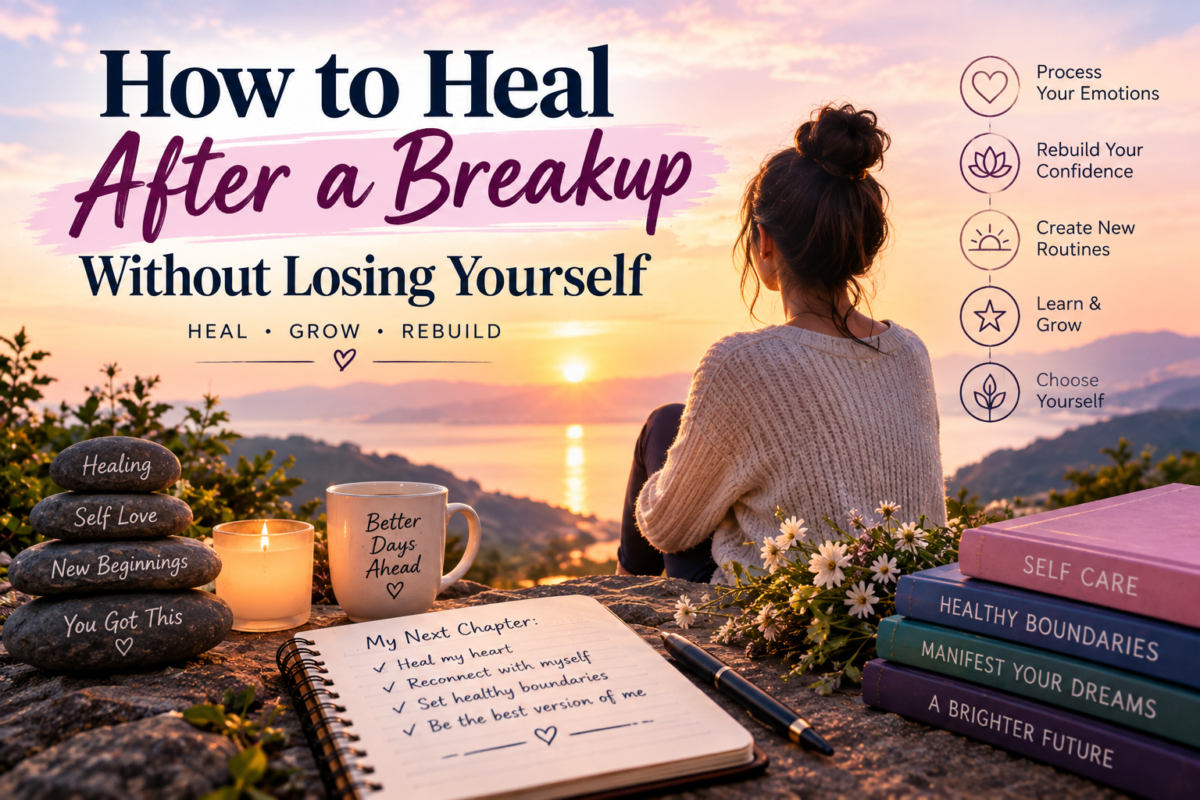



Have you ever felt overwhelmed by your emotions but struggled to explain what was bothering you? Perhaps you keep replaying a conversation or thinking about a past relationship. Even when you try to move forward, certain thoughts may keep returning.
Journaling for emotional healing offers a simple way to understand these feelings. By writing down your thoughts, you can explore your emotions, recognise recurring patterns, and discover what you need.
You don’t have to be a writer to begin. Instead, start with a notebook, a few quiet minutes, and a willingness to be honest with yourself.
What Is Journaling for Emotional Healing?
Emotional journaling means writing about your feelings, experiences, and personal challenges to understand them more clearly.
A traditional diary usually records what happened during your day. However, emotional journaling also explores how those experiences affected you.
For example, you might write about an argument with a friend. Rather than describing the conversation alone, consider why it hurt, what you needed at that moment, and how you would like to respond next time.
As a result, you may begin to understand your reactions more clearly. Although journaling cannot solve every problem, it can help you approach difficult experiences with greater awareness.
7 Benefits of Journaling for Emotional Healing
1. Understand Your Feelings Better
Sometimes, you know you’re upset without understanding why. You may feel irritated, disappointed, anxious, or sad all at once.
Writing about your experience can help you separate these emotions. Additionally, it may help you identify situations that trigger particular feelings.
Try completing this sentence:
“Right now, I feel ______ because ______.”
For instance, you might realise that you’re not angry with a friend but disappointed because you expected more support. Recognising this difference can help you communicate your needs more clearly.
2. Recognise Repeating Emotional Patterns
Do you repeatedly worry about being ignored? Perhaps you struggle to say no, even when you’re uncomfortable. These reactions may become easier to recognise when you record them regularly.
Over time, your journal can reveal patterns in your thoughts, relationships, and decisions. Consequently, you’ll have more opportunities to consider how you want to respond.
Remember, recognising a pattern isn’t about blaming yourself. Instead, use that awareness to understand your needs and make healthier choices.
If relationship patterns are affecting your well-being, read our guide on emotional dependency in relationships.
3. Create Space Before Reacting
When emotions become intense, you might feel the urge to send an angry message or make an immediate decision. However, acting on that first impulse doesn’t always lead to the outcome you want.
Journaling creates an opportunity to pause and reflect. Before responding to a difficult situation, ask yourself:
- What actually happened?
- What am I feeling right now?
- Which parts are facts, and which are assumptions?
- What response would support my well-being?
By answering these questions, you may find it easier to consider different perspectives. Nevertheless, you don’t need to find a perfect solution immediately. Sometimes, taking a step back is enough.
4. Practise Self-Compassion
Many people speak to themselves more harshly than they would speak to a friend. You might write, “I should have known better,” or “Why am I still upset?”
Unfortunately, repeated self-criticism can make difficult experiences feel even heavier.
Instead, imagine that someone you love is experiencing the same situation. What would you say to them? Would you blame them, or would you offer patience and understanding?
Now, try offering yourself that same kindness. Although changing your inner dialogue takes practice, journaling can help you notice when you’re being unnecessarily hard on yourself.
5. Identify Your Emotional Needs
Sometimes, frustration points towards a need that hasn’t been addressed. You may feel exhausted because you need rest or disappointed because you need clearer communication.
Similarly, resentment may develop when you repeatedly agree to things you don’t genuinely want to do.
To understand these feelings, ask yourself, “What do I need right now?”
Perhaps the answer is a boundary, an honest conversation, or simply some time alone. Once you recognise the need, you can consider a practical next step.
For more guidance, explore our article on setting emotional boundaries without feeling guilty.
6. Notice Your Personal Progress
When you’re going through a difficult period, it’s easy to focus on what still hurts. However, progress often appears in small ways.
You might handle a familiar trigger more calmly, express your needs more confidently, or recover more easily after a disappointing experience.
Reading older journal entries can help you recognise these changes. Moreover, it reminds you that personal growth doesn’t always happen in obvious or dramatic ways.
You don’t need to feel completely healed to acknowledge that you’re making progress.
7. Reconnect With Yourself
Daily responsibilities, relationships, and other people’s expectations can sometimes distract you from your own needs.
Journaling gives you a few quiet minutes to reflect on what matters to you. For example, you might explore which activities bring you peace, which situations drain your energy, and what kind of relationships you want to build.
Over time, these reflections can help you make decisions that better reflect your values. Ultimately, the goal is to understand yourself rather than meet everyone else’s expectations.

10 Journal Prompts for Emotional Healing
If you’re unsure what to write, these prompts can help you begin.
| Purpose | Journal prompt |
|---|---|
| Understand emotions | What am I feeling today, and why? |
| Reduce self-criticism | What can I approach with more kindness? |
| Recognise patterns | Which situation repeatedly triggers the same emotion? |
| Build confidence | What did I handle well today? |
| Set boundaries | Where do I need to communicate my limits? |
| Explore relationships | Which people help me feel respected and understood? |
| Process change | What am I finding difficult to accept? |
| Find clarity | What do I know, and what am I assuming? |
| Practise gratitude | What brought me comfort today? |
| Move forward | What is one small step I can take tomorrow? |
You don’t need to answer every question at once. Instead, choose one prompt that feels relevant and write for five to ten minutes.
How to Start a Journaling Routine
Starting small makes it easier to develop a consistent habit. Fortunately, you don’t need special equipment or a complicated plan.
- Choose a convenient time. For example, write after waking up or before going to bed.
- Set a realistic goal. Begin with five minutes rather than expecting yourself to fill several pages.
- Write honestly. Your journal is a private space for reflection, not a performance.
- Allow difficult feelings. You don’t have to turn every experience into a positive lesson.
- Finish with one helpful question. Ask yourself what might support you tomorrow.
Additionally, remember that consistency matters more than writing perfectly. If you miss a day, simply begin again when you’re ready.
If writing about painful experiences makes you increasingly distressed, pause and try a grounding activity. You can also speak with a qualified mental health professional if you need additional support.
Can You Combine Journaling With Tarot?
Yes. Journaling and Tarot can work together as reflective practices when you want to explore your emotions, choices, and personal experiences.
For example, you can draw a Tarot card and write about the ideas or feelings it brings to mind. Rather than treating the card as a prediction, use its symbolism as a starting point for self-reflection.
Consider these questions:
- What does this card make me think about my current situation?
- Which part of its symbolism feels relevant to me?
- Is there another perspective I haven’t considered?
- What practical step could help me move forward?
Through this process, you can explore your thoughts without expecting Tarot to provide a guaranteed answer.
If you’d like further support reflecting on relationship questions, explore our Tarot Reading for Relationship Guidance.

Frequently Asked Questions
1. Does journaling help with emotional healing?
Journaling may help you organise thoughts, recognise emotional patterns, and reflect on difficult experiences. However, its benefits vary from person to person, and it isn’t a substitute for professional treatment when needed.
2. How long should I journal each day?
Start with five to ten minutes. A short, manageable routine may be easier to maintain than an unrealistic daily target.
3. What should I write when I feel overwhelmed?
Begin by describing what happened, how you feel, and what you need right now. If writing makes your distress worse, pause and seek support if necessary.
4. Is morning or evening journaling better?
Neither time is best for everyone. Morning journaling may help you organise your thoughts, while evening writing provides an opportunity to reflect on the day. Choose whichever fits your routine.
5. Can journaling help after a breakup?
It may help you process emotions, reflect on relationship patterns, and clarify your needs. Nevertheless, emotional recovery takes time, and journaling cannot guarantee a particular outcome.
Final Thoughts: Give Your Feelings Space to Be Heard
Emotional healing doesn’t always require a major change. Sometimes, it begins by acknowledging what you’re experiencing instead of ignoring or judging your feelings.
Journaling offers a quiet space to explore difficult emotions, recognise patterns, and understand what matters to you. You don’t need perfect answers, and you don’t have to solve every problem today.
Start with one honest sentence. Then, write about what you feel, what you need, and what might help you take the next small step.
You don’t have to understand everything today. You only need to give yourself space to begin.
Explore More With The Astro Palace
Looking for deeper insight into your personal situation? Explore a personalised Tarot Reading with The Astro Palace for reflective guidance on relationships, emotional patterns, and personal growth.
External resource: NHS — Mental Health for general mental health information and support resources.
Disclaimer: This article is for educational purposes. Journaling and Tarot are reflective practices and do not replace professional mental health advice, diagnosis, or treatment.